
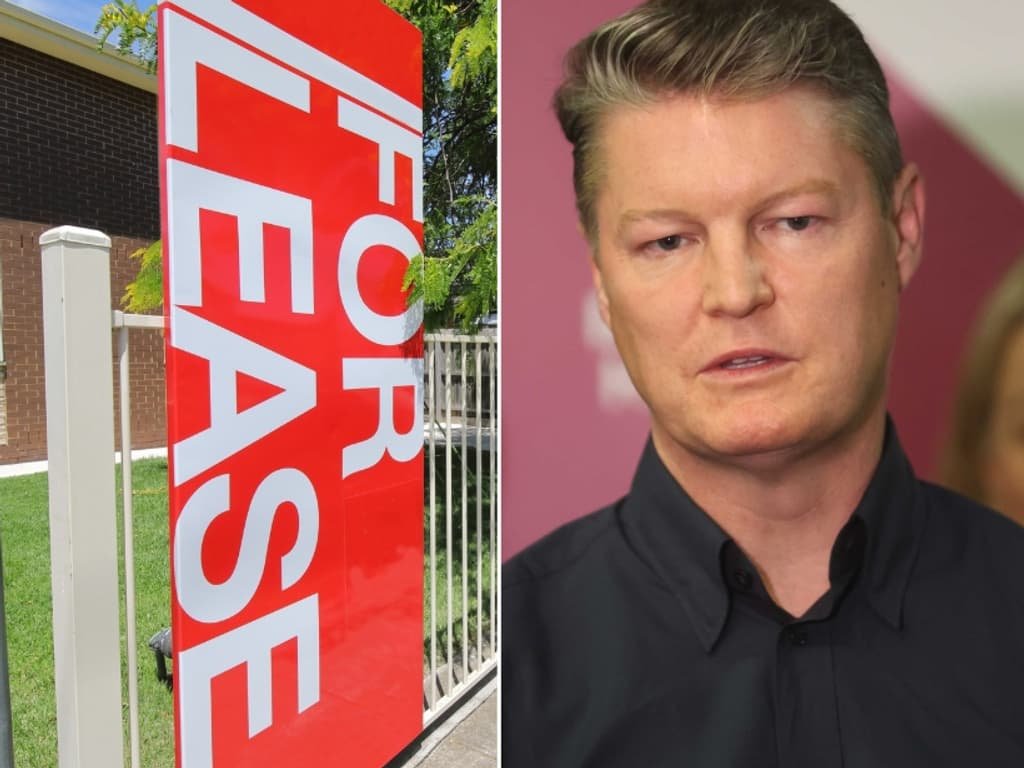
With almost half of Melbourne’s suburbs recording rental hikes well above inflation, government measures to protect tenants appear to be failing them six months on.
Close to half of Melbourne’s tenants signing up for a new lease are grappling with rental costs surging beyond a key affordability cap implemented by the state government in March.
The Carroll government are now being slammed for missing the mark with a policy that had sought to give tenants scope to push back on hikes above the Consumer Price Index, with almost 50 per cent of suburbs recording rent rises at least 0.5 percentage points above the affordability metric six months later.
However, yesterday the Victorian government announced a new web tool for renters to assess rent increases and whether they are excessive.
RELATED: Victorian landlords face battle over rent rises under new regulations
Victorian landlords targeted for mandatory licences and three-strike bans
Melbourne entry-level home prices jump up to 12 per cent amid buyer squeeze
The online Service Victoria rent increase calculator will allow people to convert rent across payment periods, compare a proposed rise with CPI and link straight to Consumer Affairs Victoria to request an investigation.
It comes as property experts have warned many of the rent rises will be justified as landlords grapple with increasing mortgage costs, inflation impacts and added expense as they updated homes to meet minimum standards that have been required by state government reforms.
REA Group data released today shows 116 suburbs had an at least $50-a-week hike in their advertised rents in the past year, with wallet-breaking sums north of $200 more a week in affluent areas including East Melbourne, Middle Park, Black Rock, Beaumaris and Kew.
Their analysis also shows an at least 4.5 per cent up tick in 207 of the 386 suburbs where the cost of renting a house was assessed, well above the 4 per cent CPI figure recorded in the same period for the Victorian capital in the 12 months to September.

Advertised rents have surged in Middle Park, with this two-bedroom home currently seeking $875 a week.
This enviable piece of Patterson Lakes will cost tenants $2500 a week.
It means about 50 per cent of suburbs outpaced CPI, despite the state government providing scope for the Victorian Civil and Administrative Tribunal and Rental Dispute Resolution Victoria to have tenants challenge hikes that exceeded it as of March this year.
With 136 suburbs recording an at least 4 per cent increase for units, out of 297 with a median recorded, the share was 45.8 per cent topping the key cost-of-living metric.
In both instances, the share of suburbs with rents outpacing CPI has risen from a year ago when the cost for houses outpaced it in 34.2 per cent of areas, and 42.2 per cent of regions with median unit rental costs topped it.
REA Group chief economist Angus Moore said the data tracked advertised rents, so predominantly covered those signing up for a new lease — and that historic data indicated that these were typically higher than rises for established tenancies.
Mr Moore said this often meant that as rents rose quickly, many tenants stayed put if they could — suggesting many found some form of relief by negotiating with their landlord.
At $1000 a week, this Essendon North rental is not within reach for most tenants.
While more affordable than other areas, Watsonia North has recorded some of the highest rental hikes in Melbourne. This home is seeking $780 a week.
The economist added that about 36 per cent of properties being sold across Melbourne at the moment appeared to be ex-rental homes, which had remained consistent for a number of months.
He added that rental market conditions were now “pretty tight” with poor vacancy rates providing scope for rental hikes to be absorbed.
Recently announced Property Investor Council of Australia chair Tim Graham said landlords would have struggled to keep up with rising costs this year, with inflation alone meaning many ordinary costs were rising.
“But there’s also four rate rises that the mortgage holder is wearing, and the minimum standards mean we may have to go and ensure the property is up to the latest specs,” Mr Graham said.
“Even for a property under 10 years old, that can be up to $2000 or $3000.”
The property investor added that he suspected many tenants would have preferred their home stayed the way it was without a rental price increase caused by a number of the changes in compliance requirements.
PropTrack economist Angus Moore says advertised rents tend to rise faster than wider rents, and are being buoyed by a low vacancy rate.
However, he noted that the primary solution to rental affordability at this point remained increasing the state’s housing supply.
Greens spokesperson for renters MP Gabrielle de Vietri said reforms from the ALP were “a toothless tiger”.
“Rents are still rising faster than inflation while renters are being squeezed for every last dollar,” Ms de Vietri said.
“Renters shouldn’t need a law degree and a tribunal hearing just to stop their landlord ripping them off.”
She said asking renters to “fight their landlords one by one” was not a solution to the rental crisis, and called for a rent freeze and a cap on increases.
Tenants Victoria chief executive Jennifer Beveridge said fairer rent increases was the “number one change renters want to see”.
“Renting is no longer a temporary step – it’s a long-term housing solution for many people, and they’re living in fear of being priced out of their own communities,” Ms Beveridge said.
“The tight rental market means many renters are accepting rent increases they think are unfair, because they fear being unable to find another property.”
Tenants Victoria chief executive Jennifer Beveridge believes tenants need to be contesting unfair rental increases, and more tools are needed to help them do so.
In some instances families were moving into share houses or homes too small for their needs, and that it was “concerning” rents were outpacing CPI and wage growth.
“Renters have protections against excessive rent increases. The problem is that these protections can be difficult to understand and apply to your personal situation.”
She added that practical tool to help renters check if their increase was excessive would give both sides confidence when negotiating.
“It’s important that renters do challenge rent increases that they think are unfair. Using your existing protections against an excessive rent increase can help keep rents more stable and contribute to protecting other renters.”
Minister for Renters Tim Richardson said the state government understood that renters were doing it tough.
“That’s why we’ve delivered more than 150 reforms to give Victoria the strongest renters’ rights in the country,” he said.
“Renters now get 90 days’ notice of any rise, stronger powers to fight excessive increases, and a new calculator that shows in seconds whether a rise outstrips inflation.”
See hubs.service.vic.gov.au/rent-increase-calculator for more information on the new rent increase assessment calculator.
Where Melbourne Rents Have Grown The Most (Houses)
| Suburb | Median Rent | Annual change % | Annual change $ |
| Middle Park | $1,183 | 29.3% | $268 |
| East Melbourne | $1,395 | 26.8% | $295 |
| Beaumaris | $1,310 | 24.8% | $260 |
| Patterson Lakes | $995 | 24.4% | $195 |
| Essendon North | $775 | 22.1% | $140 |
| Black Rock | $1,490 | 21.6% | $265 |
| Kew | $1,200 | 20.0% | $200 |
| Travancore | $780 | 20.0% | $130 |
| Watsonia North | $650 | 18.2% | $100 |
| Sandringham | $1,173 | 17.3% | $173 |
Source: REA Group
Where Melbourne Rents Have Grown The Most (Units)
| Suburb | Median Rent | Annual change % | Annual change $ |
| Kooyong | $950 | 22.6% | $175 |
| Ringwood North | $663 | 18.4% | $103 |
| Wheelers Hill | $720 | 18.0% | $110 |
| Williamstown North | $550 | 17.0% | $80 |
| Rosanna | $650 | 16.1% | $90 |
| Middle Park | $650 | 14.4% | $82 |
| Patterson Lakes | $650 | 14.0% | $80 |
| South Kingsville | $500 | 13.6% | $60 |
| Seaholme | $505 | 13.5% | $60 |
| Box Hill South | $675 | 12.5% | $75 |
Source: REA Group
Sign up to the Herald Sun Weekly Real Estate Update. Click here to get the latest Victorian property market news delivered direct to your inbox.
MORE: How Melb property went from Centrelink to $160m luxury apartment site
Hidden threat in Albo’s failing home crisis fix
Best-kept property secret: the Melbourne suburb tipped for surge