
The federal budget aims to push investor demand out of established housing and into new supply.
But in doing so, it is likely to reduce the number of homes changing hands.
That matters because home sales are not just a housing market metric; they are a major driver of economic activity and state government revenue.
Every property transaction can trigger borrowing, renovations, moving costs, retail spending and professional services.
It also triggers stamp duty.
If the Budget encourages more investors to hold and more buyers and sellers to wait, the impact will be felt well beyond house prices.
MORE NEWS
Bills are soaring – but this simple switch saves $1200
Major bank makes huge RBA call
Owner gives away $4.2m mansion for free
Transaction volumes have always been far more volatile than prices.
Over the past 25 years, Australian residential sales have moved through repeated boom-and-bust cycles, ranging from fewer than 380,000 sales a year to more than 580,000.
The sharpest falls have tended to occur when the ability or willingness to move has been disrupted: during periods of tighter credit, higher interest rates, weaker confidence or policy change.
Sales volumes fell heavily through the late 2010s as lending standards tightened and investor activity pulled back, then dropped again as interest rates rose and borrowing capacity was reduced.

By contrast, the pandemic period showed how quickly volumes can rebound when interest rates fall, credit becomes easier and pent-up demand is released.
That history matters because the Budget adds another disruption to the willingness to transact. Volumes fall when households or investors have a reason to wait, and uncertainty is often enough to slow the market.
Buyers may pause while they work out whether the changes will affect prices, rents and investor demand.
Sellers may delay if they are unsure how deep the future buyer pool will be.
Investors have even clearer reasons to sit tight: existing investors may avoid selling if it means giving up grandfathered treatment, while new-build investors may hold longer if resale narrows the future investor buyer pool.

Nerida Conisbee, Ray White Group Chief Economist
The Budget also does little to encourage downsizing, leaving another source of established housing stock constrained.
When policy change creates uncertainty and rewards waiting, fewer homes come to market – even if prices hold up.
The economic impact of this is larger than the sale itself.
Housing transactions trigger spending well beyond the purchase price.
Buyers borrow, insure, move, renovate and furnish.
Sellers often repair, upgrade or buy again.
Around each sale sits a network of activity – finance, legal services, valuation, building inspections, trades, removalists and retail spending.
A home sale is not just a transfer of ownership; it is the start of a chain of economic activity.
This is why the number of homes sold matters even when prices are rising.
A market can look strong on paper because values are increasing, but if fewer homes are changing hands, less activity is flowing through the economy.
Price growth creates wealth effects.
Transactions create actual spending.

For many parts of the economy, the number of homes sold matters more than the headline rate of capital growth.
The same logic applies to state government revenue.
Stamp duty is one of the clearest examples of why transaction volumes matter.
It is not collected because homes exist, or because home values rise on paper.
It is collected when properties change hands.
That makes state budgets highly exposed to the level of activity in the housing market.
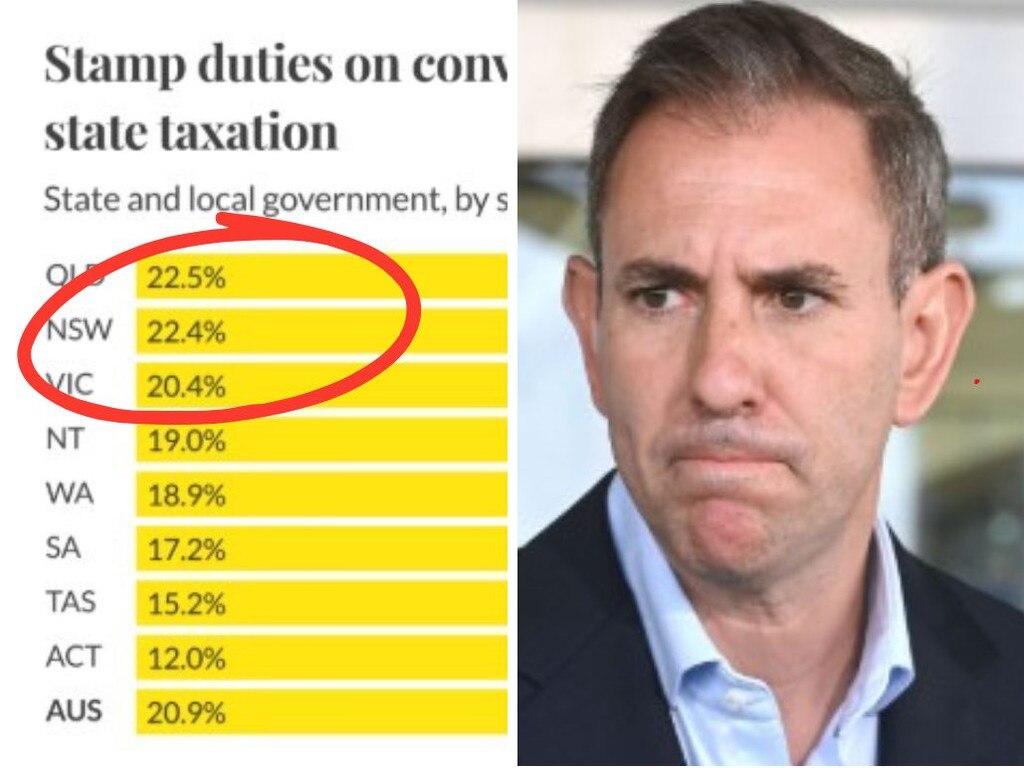
The exposure is significant. In 2024–25, stamp duties on conveyances accounted for 20.9 per cent of total state and local government taxation revenue nationally.
In Queensland and New South Wales, the share was even higher, at 22.5 per cent and 22.4 per cent respectively.
Victoria was also heavily exposed, with stamp duties on conveyances making up 20.4 per cent of total state and local government taxation revenue.
The ACT, which has been shifting from stamp duty to land tax, is the least exposed.
This means a fall in housing activity is not just a problem for buyers, sellers or property-related businesses.
It is a budget problem. State governments rely heavily on revenue from people moving, upgrading, downsizing, investing and restructuring their housing needs.
When fewer properties transact, that revenue stream becomes more vulnerable.
The link between transaction activity and stamp duty revenue is clear.
Stamp duty revenue has closely followed the total value of residential transactions over the past decade.
That value is driven by two things: how many homes sell and what they sell for.
Prices matter, but they are only half the equation.
A high-price market with fewer sales can still weaken the revenue outlook because there are fewer taxable events.
This creates a difficult contradiction for state governments.
They need housing affordability to improve, but their budgets benefit from high-value homes changing hands.
They want more efficient use of the existing housing stock, but stamp duty makes moving more expensive.
They need more supply, but they also need a market where people are willing and able to transact.
That is why the risk of fewer home sales matters so much.
If the Budget encourages investors to hold for longer, adds uncertainty for buyers and sellers, and does little to free up established housing stock, the impact will not stop at the housing market.
It will flow through household spending, business activity and state government revenue.
The Budget’s housing measures have been framed around supply and affordability.
But if they reduce the willingness of investors and households to transact, the impact will not be confined to house prices.
It will flow through household spending, business activity and state government revenue. Australia already has a housing shortage.
A market where fewer homes come up for sale will make that shortage harder to manage – and make state budgets more exposed to every shift in housing activity.