
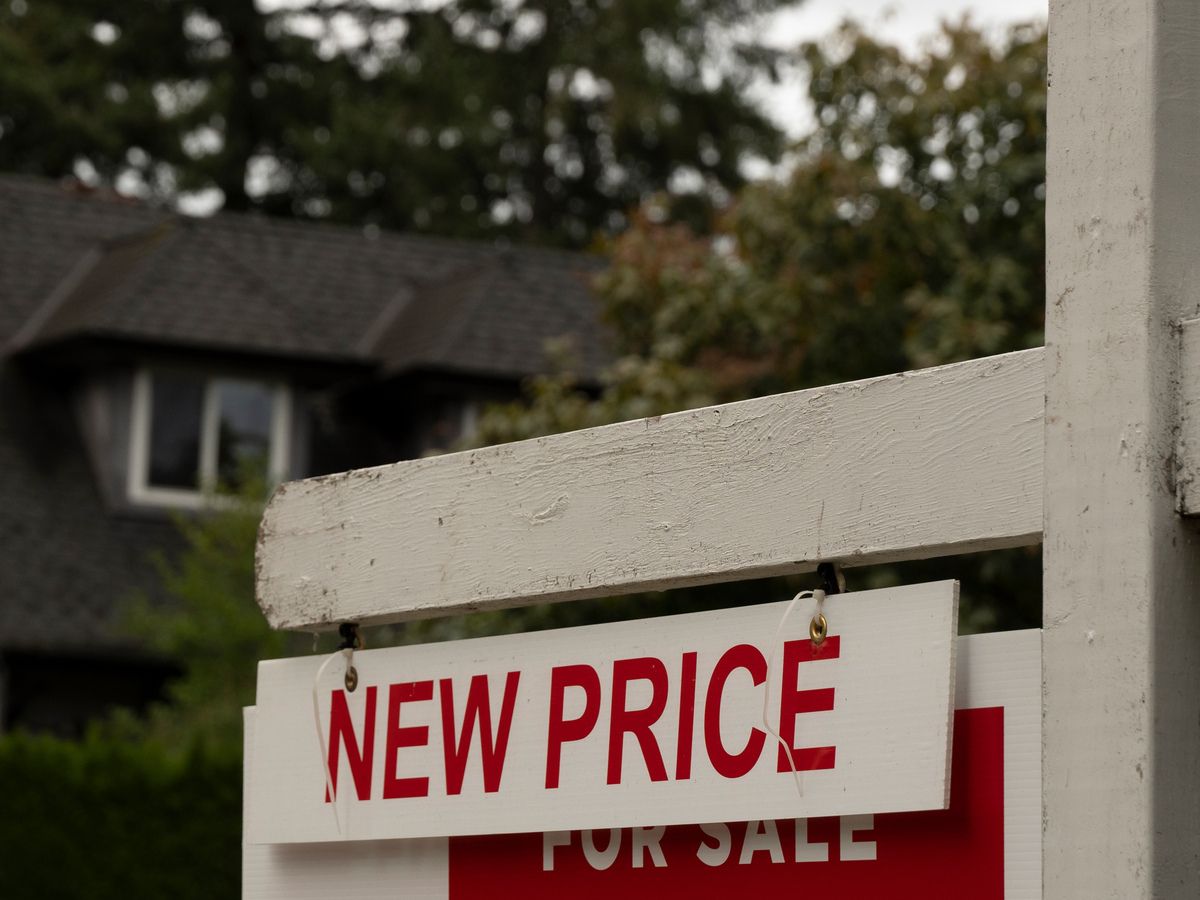
Home prices continue to fall or remain flat in major centres across the country , a potential predicament for those counting on their homes as part of their retirement plans .
The Toronto Regional Real Estate Board reported this week that in Canada’s largest city the average selling price was $1,051,969 in April, down 4.9 per cent from a year earlier. Based on the index, prices have fallen more than 20 per cent from the peak. The story is similar elsewhere ; Vancouver house prices were off almost seven per cent from a year ago in April.
For the fourth quarter of 2025, household residential real estate was down 0.2 per cent from a year ago to $8,450.6 billion, according to the latest data from Statistics Canada. The good news is that at the same time, the value of all assets, minus all liabilities, increased for Canadians by $230.2 billion to $18,594.9 billion.
Of course, wealth is not spread evenly across Canada, and 20 per cent of the country has about 65 per cent of the net worth, according to Statistics Canada, with many benefiting from an S&P/TSX Composite index that was up 28.2 per cent in 2025 and is up about another seven per cent this year.
The problem is for those who have a lot of their wealth tied up in their principal residence and who may be looking to tap into that money at some point in their retirement. It’s just not worth as much now.
And although there is little question that long-time homeowners have seen huge appreciation in their property nest eggs , will the dip in real estate values over the past two years make enough of a difference for some people to have to reconsider their retirement plans?
Robert Kavcic, a senior economist with Bank of Montreal, said pockets across markets can differ, but some cities such as Toronto and Vancouver could see prices staying flat or going down. “Incomes have to catch up to affordability,” he said.
If your home is 50 per cent of your net worth — which might not be unusual for someone with a detached home worth $1 million or $2 million in Toronto or Vancouver — should you lose $200,000 to $400,000, how much would your retirement thinking change?
The equity growth older Canadians have already built may not materially effect the retirement income from their homes, said Kavcic. “Anyone near retirement age (has) more than a decade of equity (growth), so you are scraping off 20 per cent but you probably didn’t set your retirement plan based on five years ago,” he said. Housing wealth is like paper wealth on your balance sheet and doesn’t change your cash flow, he added.
However, it is risky to count on downsizing to fund retirement, said certified financial planner Jason Heath.
“In practice, I see a lot of retirees who age in place and don’t downsize. Even those who figured they would downsize in retirement earlier on in their financial lives, (don’t),” he said. “Something that I worry about a little is people holding on for a recovery in hopes of timing the market.”
“Where do people go?” asked Jason Mercer, the Toronto Regional Real Estate Board’s chief information officer, referring to the lack of other housing downsizing options for retirees to move to so they can tap into their housing wealth.
For those who planned to extract value out of their home while living there, Dan Eisner, founder and chief executive of True North Mortgage, said while he doesn’t see many people heading into retirement with debt, even a paid-off home is tough to leverage because a traditional mortgage loan will be hard to qualify for in retirement.
“The reverse mortgage has become more popular,” said Eisner, about the product that generally allows you to access 55 per cent of the equity in your home with no mortgage payments. However, ultimately it chips away at the equity in your home once you move.
“The biggest difference with a mortgage home equity line of credit (or HELOC) is you have to have the income to support the payment; a reverse mortgage, you don’t need that.”
But as prices go down, reverse mortgages are affected. “Your property just isn’t worth as much,” Eisner said. “Even if you just want to take some money and put it into some of the exchange-traded funds for income, your money is worth less. So that is concerning.”
Anthony Scilipoto, president and chief executive of Veritas Group of Companies, said the immediate impact of the decline is the so-called “wealth effect,” which is the idea that people spend more when they perceive they have more money.
“It doesn’t matter how rich you are. You start thinking a little differently,” said Scilipoto, about paper losses. “Things just start bothering you. You cut back a little bit because you are down. You do something a little less expensive.”
Would people actually work a little longer if their homes were no longer rising in value? Scilipoto said maybe, but it depends on how much of your house is your nest egg. “This would all get exacerbated if we have a stock market downturn,” said Scilipoto.
Heath said some homeowners may delay retirement and work a little longer if their homes have dropped in value, but said he believes stock market exposure may insulate them.
The other impact might be what these values say to younger generations as they watch a housing market that doesn’t do all that much.
“People may rethink giving money to their children to buy a house … (as) just not a good investment,” said Scilipoto. “We are already seeing this.”
Housing can make sense behaviourally because you get a mortgage and have a forced savings plan. The government even encourages people to raid their retirement funds for up to $60,000 and pay it back over 15 years to get into the housing market.
But the flaw in the house-as-retirement-piggy-bank plan is that you have to sell it or borrow against it to access the money.
And if home values don’t rise, or even fall further, the idea of a house as a retirement nest egg is looking broken.
• Email: gmarr@postmedia.com