
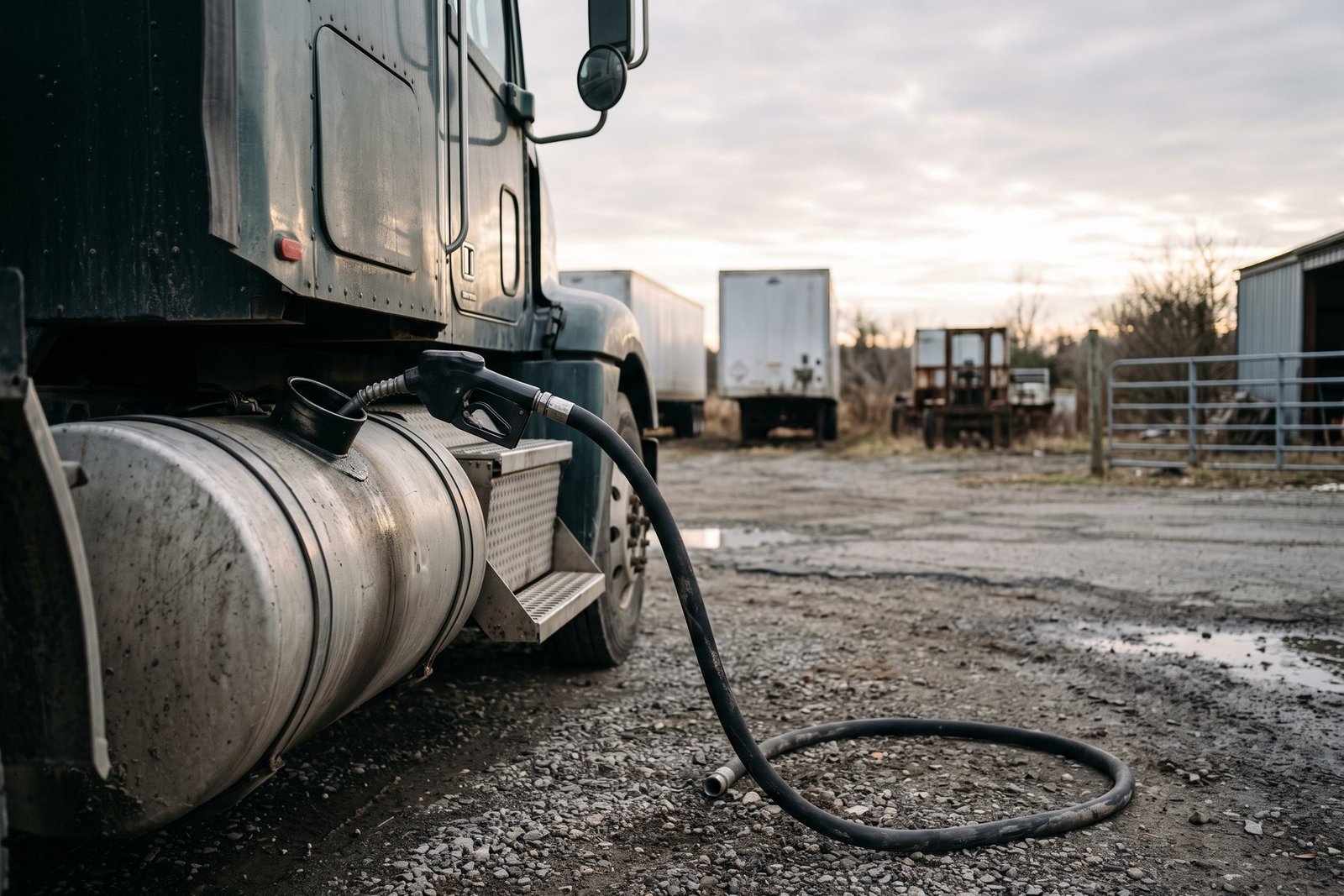
President Donald Trump temporarily ordered broader access to tax-free diesel fuel, which is crucial for trucking and agriculture, but experts said the move would have limited results in reducing high fuel costs.
What the order changes
Trump signed an executive order Oct. 5 during a rally in Grand Island, Nebraska, to defer collection of excise tax on so-called red dye diesel fuel through the end of the year. The fuel is dyed because it is typical for off-road uses such as agriculture and is exempt from federal highway taxes.
Trump said the order would save truckers an average of $100 each time they fill up and would save farmers millions of dollars. He signed the order after White House aide Natalie Harp carried it on stage and then tossed the Sharpie into the cheering audience.
“This order will also drive down the cost of all goods, including groceries very substantially,” Trump said, based on the ripple effect from lower-cost trucking. “It’s an honor to do it,” he added, hoping it wouldn’t be needed for long.
Why experts doubt the impact
Trump’s order was the latest reaction to fuel prices spiking in response to the U.S.-Israel war on Iran and Ukrainian strikes on Russian refineries. Trump has argued that gas and diesel prices will drop after the wars are resolved and that higher costs were “a small price to pay” to prevent Iran from obtaining a nuclear weapon.
Higher prices have contributed to the president’s low approval rating before the Nov. 3 midterm elections that will determine control of Congress. Diesel fuel averaged $6.32 per gallon on Oct. 5, after rising above $6 for the first time on Sept. 11, according to AAA.
The federal excise tax on diesel fuel is 24.3 cents per gallon and state taxes average 35.5 cents per gallon, according to the U.S. Energy Information Administration. The federal taxes go to the Highway Trust Fund, which pays for road construction and investment in mass transit.
Patrick De Haan, head of petroleum analysis for the price-tracking website GasBuddy, said action on dyed diesel could help reduce prices for truckers but would do little to help farmers who already have access to it.
“Taxes aren’t the problem, supply is,” De Haan said on X on Sept. 28.
Trump’s directives come after European countries agreed Oct. 2 to release 100 million barrels of diesel fuel and crude oil from their reserves to ease global pricing.
Trump said in September he supported a temporary ban on U.S. diesel exports. But he reversed that position Oct. 2, telling reporters at the White House that option was never really on the table.
“Europe has a lot of diesel, and they’re going to be making a major world contribution, and so are we,” Trump said. “And we’re not going to be doing the export ban.”
Rebecca Babin, a senior equity trader at CIBC Private Wealth, said after the European announcement that releasing diesel stocks would likely lower prices, with “some benefit in the U.S.”
“That relief would be temporary,” Babin said. “Lower prices could revive some demand that high prices have curtailed, while the released stocks would eventually need to be replenished.”