
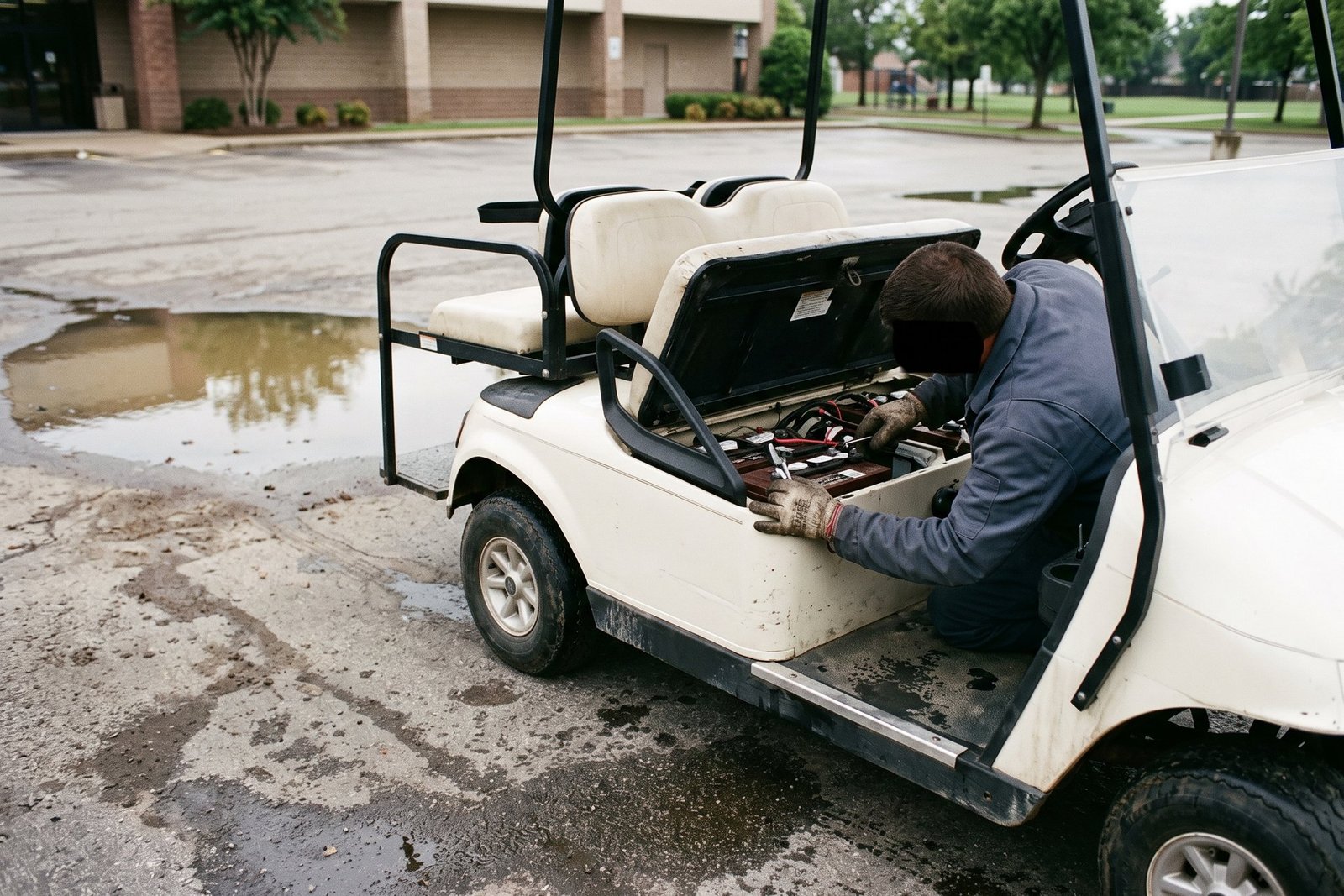
If you own a golf cart that was caught in flooding, it could pose a fire hazard.
Saltwater and some golf cart batteries can be a dangerous combination. Golf carts with lithium-ion batteries can be at serious risk when exposed to saltwater because the water can cause short circuits inside the battery pack.
“Under normal operating conditions, the probability of a lithium-ion cell going into thermal runaway is less than 1 in 10 million,” University of South Carolina professor Xinyu Huang wrote. “But it increases sharply if the cell is subjected to electrical, thermal or mechanical stress, such as short-circuiting, overheating or puncture.”
Saltwater is especially problematic because dissolved salt makes it conductive, allowing electrical current to flow readily. Seawater can be more than 1,000 times as conductive as fresh water, according to Huang.
This is a concern only if the golf cart and battery were affected by flooding. Ocean air and salt spray typically won’t cause a fire. But if the battery was submerged or had significant contact with saltwater, don’t start the cart or charge the battery before getting it inspected.
Lithium-ion batteries pose a greater fire risk in these circumstances than older lead-acid batteries, though saltwater can damage either type.
That doesn’t mean golf carts or their batteries are generally dangerous. Electric vehicles are still safe to own and drive in most circumstances, Huang wrote. During hurricanes and floods, however, it is important to keep EV battery packs from being submerged, particularly in saltwater. The same applies to other products with lithium-ion batteries.
Before flooding, move smaller items such as e-bikes and power tools to upper floors or high shelves, Huang advised. Move electric vehicles to higher ground if possible.
If an EV has been submerged for hours or days, especially in saltwater, public safety experts recommend treating it as a fire hazard and parking it in an open area away from other valuable property. Don’t attempt to charge or operate it. Contact the manufacturer to arrange an inspection for battery damage.