
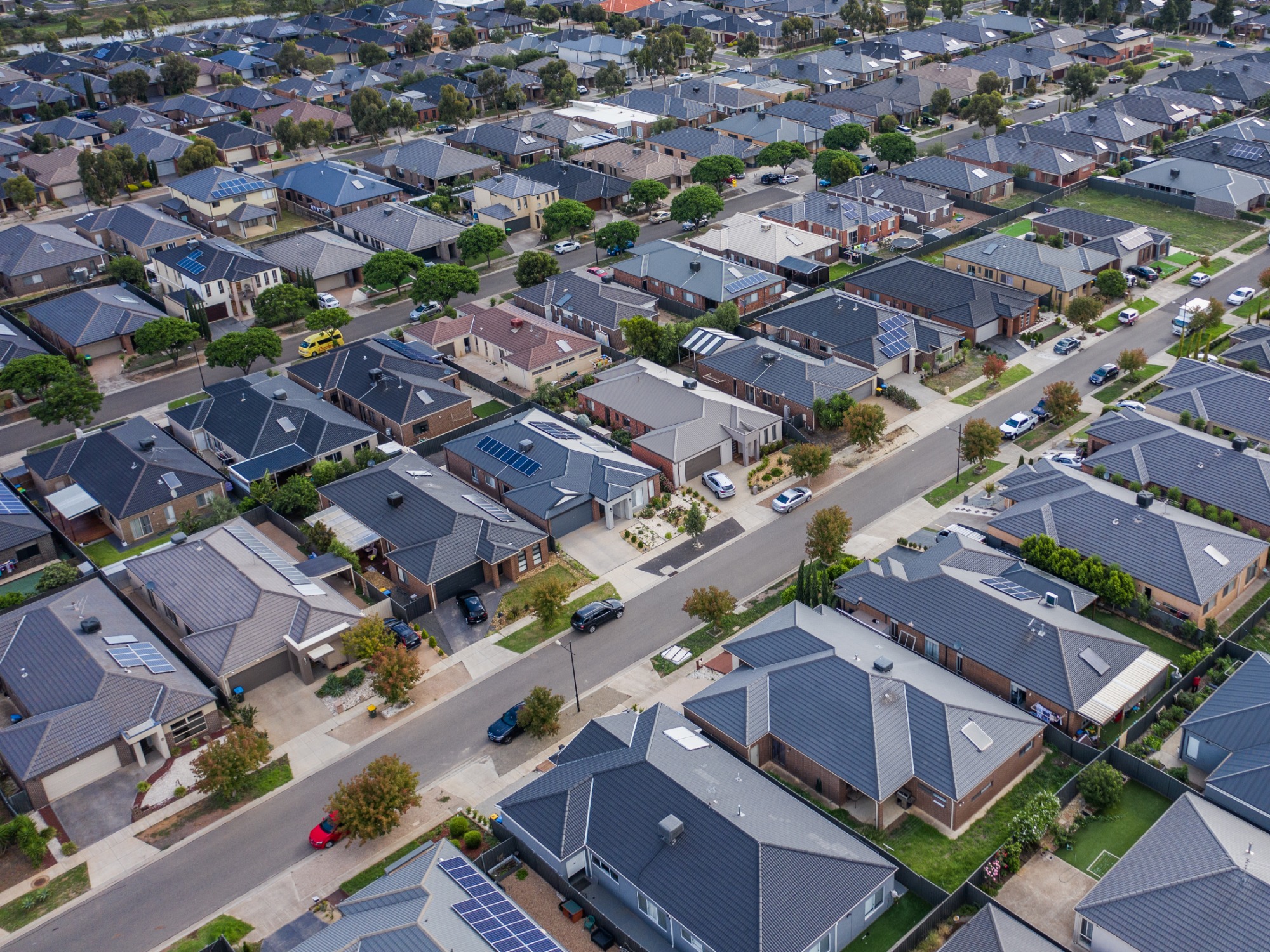
Connectivity can no longer be left until the end of a project. It now plays a key role in how a development comes together, underpinning everything from planning to handover.
Right now, developers are facing a tougher balancing act.
Tighter margins are making cost blowouts harder to absorb, faster construction timelines are turning minor delays into project risk, and a greater number of stakeholders is increasing the chance of things slipping between the cracks.
Internet infrastructure can underpin everything from on‑site coordination to a smooth resident move‑in. Picture: Getty
This, along with the scarcity of resources and increased difficulties in build approvals mean more and more developers are facing project delays and increased delivery risk.
It’s a more complex and less forgiving development cycle.
Considering this pressure, some decisions can carry more hidden risk than others. One of them is connectivity, with internet infrastructure underpinning many things from how smoothly trades and services are coordinated to whether residents can move in without a hitch.
In 2026, it’s a way to avoid delays before they happen.
The often-overlooked decision with an outsized impact
Much like other utilities, internet infrastructure is often treated as a last-minute inclusion. But Andrew Walsh from the nbn® New Developments team says developers need to reframe connectivity as a delivery decision, not just a utility choice.
“Internet infrastructure isn’t just a box to tick at the end, but a piece of the build that interacts with everything else and shapes several on-site and post-completion outcomes,” he says.
“This makes it something that should be locked in earlier as a key project decision.”
For example, connectivity can hold up delivery timelines, with late changes requiring redesign, re-approvals or revisiting earlier work. It can also add to coordination complexity, particularly when multiple providers and trades need to align late in the build.
And with 40% of Australians using five or more connected devices, according to Australian Communications and Media Authority, for incoming buyers, it can make all the difference to their overall experience – especially if they can’t get online straight away.

For incoming buyers, early connectivity can make all the difference to their moving-in experience. Picture: Getty
Lastly, it can feed into the long-term value of the development, as buyers increasingly judge quality by how ready the development is to be lived in.
Why timing can matter more than cost
“Many developers are used to sorting connectivity towards the end, because it’s traditionally been treated as something that sits outside the core build decisions,” says Walsh.
But late decisions can mean rework if infrastructure doesn’t align with what’s already been built, delays in sign-off and completion, friction in getting consultants, builders and providers on the same page, and costs that weren’t budgeted for early on.
On the other hand, making decisions around internet connectivity early – alongside other core services and infrastructure – can mean a lower chance of last-minute fixes down the track.
“We’re seeing more and more developers consider connectivity as a choice that influences management of downstream risk,” says Walsh.
A helpful framework to use could be:
- Cost, timing and delivery trade‑offs: What potential impacts should developers consider when making connectivity decisions, particularly when weighing upfront costs, project complexity and longer‑term delivery outcomes?
- Timing versus certainty: Does pushing the decision back genuinely keep options open or does it just push pressure into the final stages of the project?
- Coordination simplicity versus added complexity: Will this choice make it easier for consultants, builders and providers to work together or introduce more moving parts to manage later?
- Delivery focus versus end-user experience: Are you optimising for getting the project finished or for how it will actually perform for buyers and residents once they move in?
How connectivity can impact buyers
The move-in experience is a high-pressure moment and one of the first real tests of a development for buyers. It’s also a key opportunity to back up what’s been promised.
Buyers and renters alike typically have clear expectations around how functional their home will be from day one, including how easy it is to get connected, and how smooth that connection is.
“Getting it right before move‑in helps support buyers and position a development as premium, desirable, and built for long‑term value,” says Walsh.
Internet infrastructure as an industry shift
Internet connectivity is now a signal of how well a project has been delivered – and that expectation is becoming a new standard rather than just a bonus.
Smart developers are now bringing connectivity earlier into planning, realising that decisions made at the start of a project can have flow-on effects right through to completion and beyond.
“Any developer is looking for decisions that will reduce friction and keep things moving, and a well-planned internet connection, considered early, will inevitably support that,” says Walsh.
In short, internet is no longer a late-stage utility decision. In 2026, it’s crucial for keeping a project on track and ensuring it stacks up once people move in.