
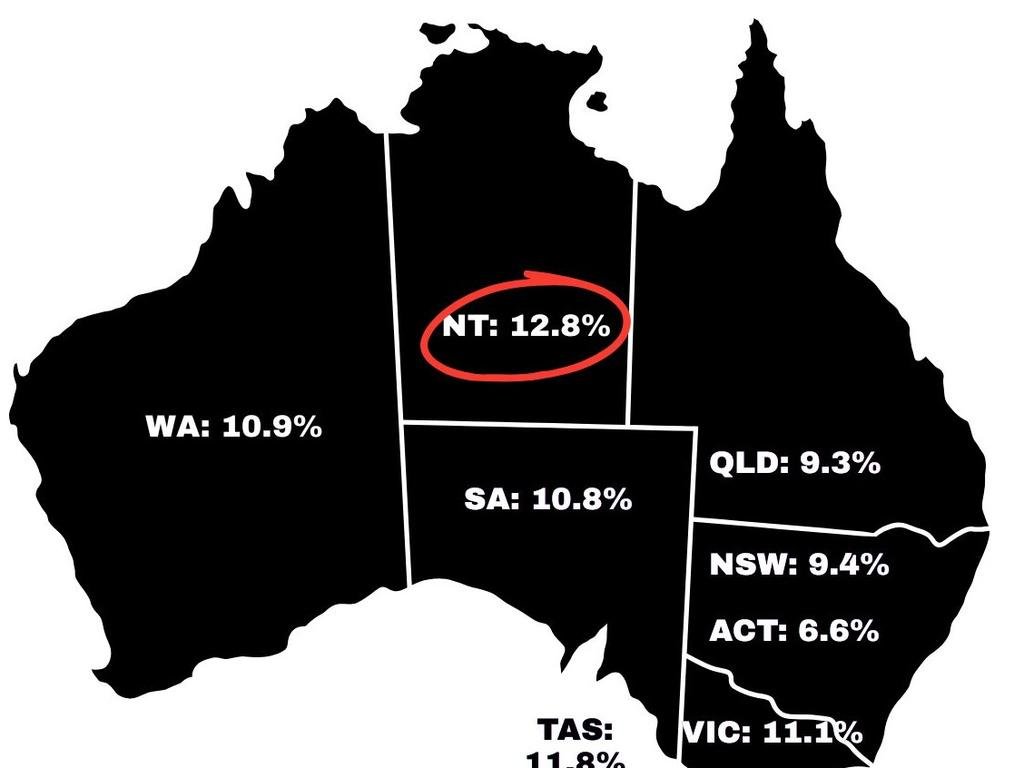
Australia’s vacant homes stats were cause for much debate last Census.
A single Census answer exposed an infuriating paradox under Australian roofs – one analysts hope five years of housing crisis will finally have changed.
Beneath routine questions asking how many bedrooms are in your home, who slept under your roof last night and who is listed as temporarily absent lies a clear contradiction – extreme housing pressure clashing with a vast amount of under-utilised residential space.
RELATED: One sad Census question that will break Aus

Prime Minister Anthony Albanese is set to receive a very real scorecard on how the nation has changed. Picture: NewsWire / Martin Ollman.
When Aussies last filled out Census forms in 2021, Australian Bureau of Statistics data recorded 1,043,776 unoccupied private dwellings – roughly 10 per cent of all Australian homes, with analysts poring over a multitude of reasons why.
Beyond those empty houses, analysis by the Australian Housing and Urban Research Institute exposed a structural gap where 77 per cent of private homes – roughly 7.4 million households – had at least one spare bedroom sitting vacant.
That totalled more than 13 million unused bedrooms nationwide.
Property analyst James Fitzgerald yesterday warned that while the public fixates on population growth, it is this kind of household density that is driving housing price pressures.
“The headline number will inevitably be population growth, but the figure I’ll be watching most closely out of today’s Census is the number of Australians per household,” Mr Fitzgerald said.
“A reduction of just 0.1 people per household creates demand for roughly an additional one million dwellings.”
Australian Bureau of Statistics data recorded 1,043,776 unoccupied private dwellings last Census. Picture: David Killick.
While think tank Prosper Australia blames speculative land-banking for homes lying vacant – using water-meter tracking to identify over 100,000 left vacant or underused over a 12-month period in Melbourne alone – demographers have urged caution.
In an analysis investigating the phenomenon, SGS Economics and Planning found the vast majority of empty properties on census night were not sitting idle intentionally.
“Two-thirds of unoccupied dwellings on Census night were vacant for routine operational reasons, including residents travelling, hospital stays, or homes transitioning between rental tenancies,” the report said.
“Australia’s unoccupied dwelling rate has hovered consistently near 10 per cent for over 35 years, reflecting structural market friction rather than a sudden wave of land-banking.”
SGS said “it is regional holiday hubs and tourist destinations that consistently drive up the national unoccupied average” – while capital cities where demand is highest have the lowest vacancy rates.
Population by generation, 2021. Source: ABS
With much changing since the pandemic, including the growth in work-from-home habits, some of that vacant space will now have been converted into things like permanent home offices or gyms – rather than housemates.
For many outraged over any need to justify keeping vacant bedrooms or space at home, it will be an unequivocal no if any governments try to use incoming data to unlock even a fraction of those empty rooms – no matter how much they might ease Australia’s rental shortfall.
The real story ahead is now whether governments will penalise speculative property banking that might purposefully leave entire properties vacant, and if there will be moves to incentivise downsizing.
Failing that, this Census too could just mark millions more empty bedrooms standing as proof of a system that’s rapidly become unfit for purpose.