
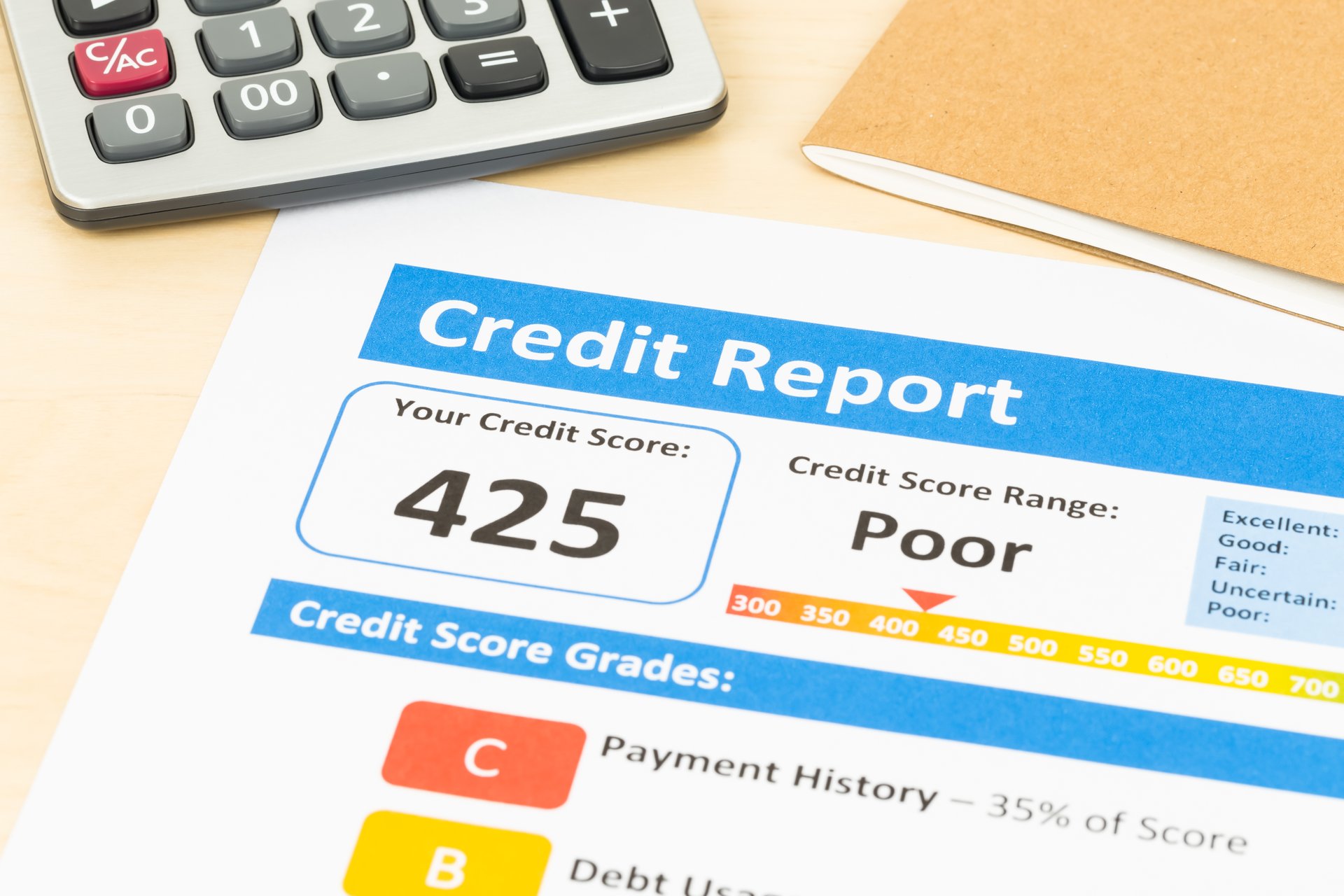
You logged in to your bank app, glanced at your credit score, and felt your stomach drop.
Last month it was fine. This month, it’s tanked — 40 points, maybe 60, maybe more. And you swear you haven’t done anything different.
Here’s the brutal truth: You don’t have to do anything dramatic to lower your score. A single late bill, a maxed-out card, even paying off a loan the wrong way can send it tumbling.
You’re also not alone. The national average FICO score has now fallen for two years in a row, landing at 715 in 2025 — down from 717 the year before and 718 the year before that. Rising credit card utilization and a spike in missed payments — partly tied to resumed student loan delinquency reporting — drove the slide.
So if your score just took a hit, you’ve got plenty of company. The question is, which of these seven things did it?
1. You missed a payment
This is the big one. Payment history makes up 35% of your FICO score — the single biggest factor in the formula.
Miss one bill by 30 days or more, and your lender will report it to the bureaus. That one slip can cost you 60 to 110 points, depending on where your score started.
The higher your score, the harder you fall. Someone with an 800 score loses more points from a single 30-day late payment than someone at 680. The math feels unfair, but it’s how the model works.
Pay on day 29 and you might owe a late fee, but the bureaus won’t hear about it. Cross into day 30, and the damage is done.
2. You ran up your credit card balances
Amounts owed — mostly your credit utilization — make up 30% of your FICO score. That’s the second-biggest factor.
Here’s how utilization works. If you have a $10,000 credit limit and you’re carrying a $3,500 balance, you’re using 35% of your available credit. Most experts recommend keeping that ratio below 30%, and the highest-scoring consumers keep it below 10%.
The catch? Your card issuer reports your balance once a month, usually on the statement closing date — not the due date. So even if you pay in full every month, a big purchase that hits before the statement closes can spike your utilization and tank your score.
The fix: Pay the balance down before the closing date, not just the due date. If your overall balances are heavy, check out these methods for paying off credit card debt.
3. You applied for new credit
Every time you apply for a card, car loan, or mortgage, the lender pulls your report. That’s a hard inquiry, and it knocks a few points off.
One hard inquiry isn’t a big deal. Three or four in a short window is. To lenders, it looks like you’re scrambling for money.
There’s an exception. If you’re rate-shopping for a mortgage or auto loan, the bureaus typically group inquiries within a 30-day window into a single event. So shopping around won’t punish you — as long as you do it fast.
4. You closed an old credit card
This one trips up a lot of people. You decide to “clean up” your finances by closing an old card you don’t use anymore. Feels responsible. Hurts your score.
Two things happen. First, you lose that card’s available credit, which jacks up your utilization ratio overnight. Second, if it was one of your older accounts, you’ve shortened the average age of your credit history — and length of history is 15% of your score.
The rule: Don’t close old cards just to feel tidy. Stick them in a drawer, run a small recurring charge on each, and pay it off every month.
Exception: If you’re paying a fat annual fee, either close the card, or better yet, call the company and tell them that if they don’t forgo the annual fee, you’ll forgo the card.
One thing before we keep going — the financial world is louder and dumber than ever. Hot takes everywhere. Almost none of it is worth your time. I’ve spent 40+ years cutting through the noise so you don’t have to. Sign up for the free Money Talks Newsletter — 10 seconds, no spam, just the stuff that matters.
5. You paid off a loan
Wait — paying off debt hurt me?
Sometimes, yes. Your credit mix — the variety of account types you carry — is 10% of your score. The scoring model likes to see both revolving accounts (credit cards) and installment accounts (car loans, mortgages, student loans).
If you just paid off your only car loan and now your report shows nothing but credit cards, your mix gets weaker. Your score can dip 10 or 20 points.
Don’t ever avoid paying off debt to protect your score. That would be insane. Just know the dip is temporary and meaningless. You’re better off without the loan.
6. Your student loan just went delinquent
This is the news story of the year. Pandemic-era protections that paused student loan payments officially ended, and the 12-month “on-ramp” that kept missed payments off credit reports expired in October 2024.
The result has been carnage. According to the Federal Reserve Bank of New York, 2.2 million delinquent student loan borrowers saw their credit scores drop by more than 100 points between January and March of 2025. Another 1 million experienced drops of 150 points or more.
FICO’s spring 2026 data shows the average new student loan delinquency now costs borrowers 62 points off their FICO score — enough to knock you from “good” credit into “fair” in a single reporting cycle.
If your federal loan went 90 days past due, your servicer reported it. The fix isn’t pretty: Contact the servicer about an income-driven repayment plan or rehabilitation immediately. Every additional month it sits in delinquency makes recovery harder.
7. There’s an error on your credit report
Sometimes the damage isn’t your fault at all. The Federal Trade Commission has previously estimated that roughly one in five Americans has an error on at least one of their three credit reports.
Maybe a payment got reported as late when it wasn’t. Maybe an account you closed years ago is showing as open with a balance. Maybe somebody stole your identity and opened a card in your name.
You’re entitled to a free credit report from each of the three major bureaus every year at AnnualCreditReport.com — and you should pull yours immediately. Dispute anything that’s wrong. Errors are one of the few credit problems with a relatively fast fix.
If you also want to see your actual score, here are ways to get your FICO score for free.
The bottom line
Your credit score isn’t a mystery, and it isn’t fragile. It’s just a snapshot of your borrowing habits at one moment in time.
If your score just took a hit, figure out which of these seven culprits did the damage and deal with it. Most drops recover within a few months once you fix the underlying issue. Some — like a missed payment — take longer to fade, but they do fade.
The most important thing to remember: A single bad month isn’t permanent. Keep paying on time, keep your balances low, and keep your oldest accounts open. For more, see “7 Ways to Boost Your Credit Score Fast.” The score will come back.