
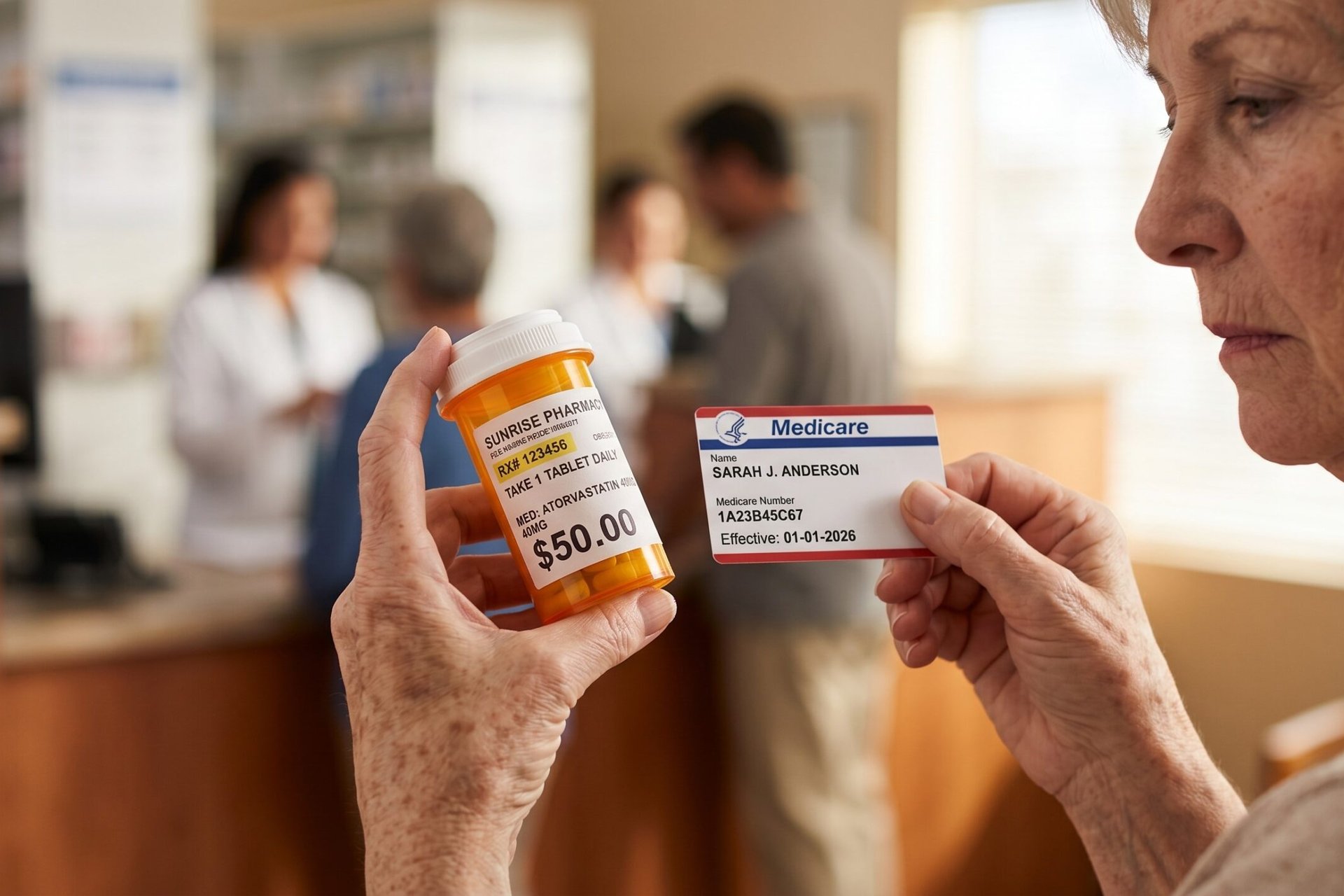
For the first time in its history, Medicare is about to cover weight-loss drugs. Starting July 1, seniors who qualify can get Wegovy or Zepbound for just $50 a month through a new program called the Medicare GLP-1 Bridge.
That’s a massive deal. These drugs typically cost more than $1,000 a month at list price. And for decades, federal law banned Medicare from covering any medication prescribed solely for weight loss.
So $50 sounds like a miracle. But before you call your doctor, you need to understand what you’re actually signing up for.
Here are seven things every Medicare beneficiary should know before counting on this program.
1. You probably don’t qualify
This isn’t a blanket benefit for every senior who wants to lose weight. The eligibility criteria are tight.
You’ll need a body mass index (BMI), a measure of body fat based on height and weight, of at least 27 combined with a qualifying medical condition like prediabetes, a history of heart attack or stroke, or peripheral artery disease.
At higher BMI levels (30+), conditions like heart failure, uncontrolled high blood pressure, chronic kidney disease or severe sleep apnea can qualify you.
According to administration officials cited by CNBC, roughly 10% of Medicare beneficiaries are expected to be eligible. That’s a fraction of the roughly 67 million people enrolled in the program.
Your doctor will also need to submit a prior authorization through a central processor run by the Centers for Medicare & Medicaid Services (CMS) — not your regular Part D plan. That’s extra paperwork, and it could mean delays.
2. It only lasts six months
The Bridge program runs from July 1 through December 31, 2026. That’s it. Six months.
After that, you’ll need to be enrolled in a Part D plan that participates in a longer-term program called the BALANCE Model, which is supposed to launch in January 2027 and run through 2031.
But there’s a catch within the catch. We’ll get to that next.
3. The future of this coverage is hanging by a thread
For the BALANCE Model to move forward in Medicare, at least 80% of Part D enrollment must be represented by plans that apply to participate. The application deadline was April 20, 2026, and CMS is expected to announce whether that threshold was met by April 30.
Here’s the problem: According to the Advisory Board, most Part D sponsors don’t believe the 80% threshold will be met.
If it isn’t, there’s no BALANCE Model in 2027. And that means millions of seniors who started GLP-1 medications under the Bridge could lose access at the end of the year.
Think about that. You spend six months on a drug that’s working, your weight’s coming down, your health markers are improving — and then on January 1, 2027, the rug gets pulled.
4. Health insurers have serious doubts
This program isn’t just facing skepticism from actuaries. The insurance industry itself is raising red flags.
The Alliance of Community Health Plans said publicly that research has raised concerns about GLP-1 side effects, risks and long-term adherence. That’s a polite way of saying: “We’re not sure these drugs deliver lasting results, and we’re worried about the cost.”
It’s a legitimate concern. Research shows that patients who stop taking GLP-1 medications tend to regain weight quickly. And insurers — who’ll bear the financial risk under the BALANCE Model — aren’t thrilled about covering a drug patients may need indefinitely.
Some industry analysts have pointed out that if lower GLP-1 prices lead to massively wider use, the total spending on these drugs could still surge, eating into plan budgets.
5. Your $50 copay doesn’t count toward your Part D cap
Here’s a detail almost nobody’s talking about. The $50 you pay each month under the Bridge does not count toward your Part D annual out-of-pocket cap, which is $2,100 in 2026.
That’s because the Bridge operates completely outside of normal Part D coverage. CMS runs the whole thing through a separate claims system. Your Part D plan has nothing to do with it.
So those GLP-1 payments won’t help you reach your out-of-pocket limit faster for other medications you’re taking. It’s essentially a separate bill on top of everything else.
6. Low-income subsidies don’t apply
If you qualify for Medicare’s Low-Income Subsidy program — also known as Extra Help — you’re used to paying reduced copays on your prescriptions. Under the Bridge, that benefit doesn’t apply to GLP-1 drugs.
That means even beneficiaries who normally pay little or nothing for medications will be stuck with the full $50 monthly copay. For someone living on a fixed income, $50 a month — $300 over the six-month program — may not be manageable.
CMS hasn’t addressed this gap.
7. You may have to switch plans in 2027 to keep your drugs
Even if the BALANCE Model launches, your current Part D plan might not participate. Participation is voluntary.
That means to maintain coverage of your GLP-1 medication in 2027, you could need to switch to a new Part D plan during open enrollment. And switching plans can have ripple effects on coverage for every other drug you take.
Plans can also drop out of the BALANCE Model in future years. So you might switch plans once, get settled, and then face the same disruption all over again.
What you should do right now
Don’t wait to see how this plays out. If you’re on Medicare and interested in GLP-1 coverage, take these steps now.
Talk to your doctor. Find out if you meet the BMI and medical criteria for the Bridge program. Start getting your conditions documented. The prior authorization process will require it.
Watch for the April 30 announcement. CMS is expected to reveal whether enough Part D plans signed up for the BALANCE Model to continue in 2027. That announcement determines whether this is a temporary experiment or a lasting benefit.
Review your Part D plan. If BALANCE moves forward, you’ll want to know whether your plan is participating before open enrollment starts on October 15. Don’t wait until December to figure it out.
Consider the full cost picture. Even at $50 a month, that’s $300 over six months. And if you’re also paying for other Part D drugs, those costs add up fast. Know what you can afford — and what Medicare won’t cover.
If you’re paying out of pocket for other prescriptions, it’s also worth knowing ways to cut those costs to free up room in your budget.
Meanwhile, keep in mind that Ozempic, Wegovy and Rybelsus are among the 15 drugs recently selected for Medicare price negotiations, which could lead to additional savings starting in 2027. And 10 other drugs have already gotten cheaper thanks to the first round of those negotiations.
Medicare covering weight-loss drugs is historic. But don’t mistake a headline for a guarantee. This program is temporary, limited and uncertain. The best thing you can do is go in with your eyes open.