
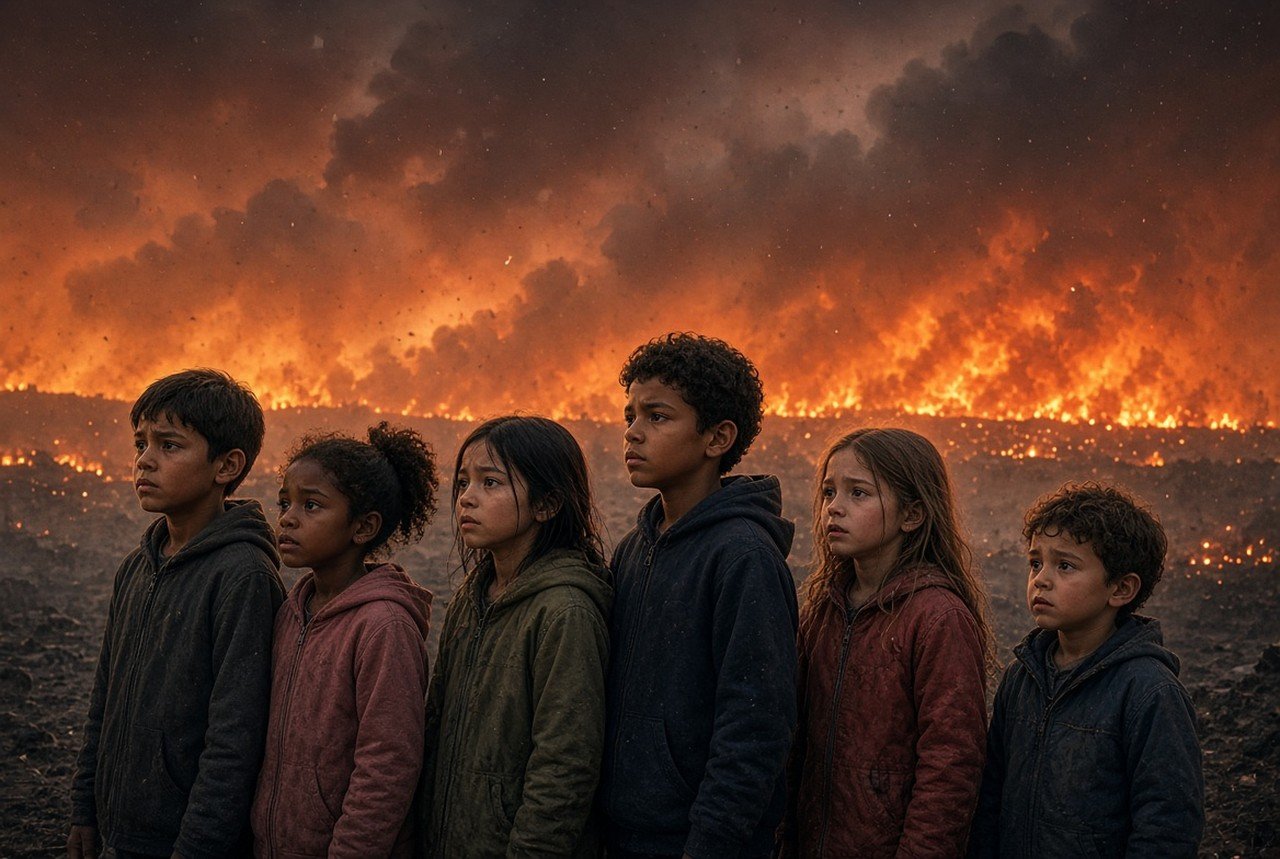
Save the Children says climate-fueled wildfires exposed millions of children to unusually high carbon emissions across the US, Canada, the UK and Europe over the past month.
(Investorideas.com Newswire) Toronto, 12 August 2026 – About 26 million children in the United States, Canada, the United Kingdom and Europe Union lived in areas that experienced unusually high carbon emissions over the past month, with millions remaining exposed as fires continue to burn, said Save the Children.
Hot, dry weather, supercharged by climate change, fueled hundreds of fires near densely populated cities and towns between early July and early August. During this period, about 15 million children lived in areas deemed to have “extremely unusual” levels of carbon emissions compared with the average for the same period between 2003 and 2025, while a further 11 million lived in areas where levels were much higher than normal [1].
Advertisement
While air pollution affects everyone, children are among the most vulnerable because their bodies, organs and immune systems are still not fully developed, said Save the Children. Children absorb more pollutants than adults as they tend to breathe faster, with fine particulate matter, known as PM2.5, associated with premature deaths in the general population. In addition, according to the World Health Organization (WHO), PM2.5 can cause and worsen diseases of the lungs, brain and skin, and has also been linked to cognitive impairment and memory loss.
A report by Save the Children and the Vrije Universiteit Brussel last year found that 1.5 million children could be spared the consequences of experiencing unprecedented lifetime exposure to wildfires if warming is limited to 1.5 degrees celsius. [2]
Zainab, 16, a Save the Children Youth Advisor from London, said:
“For many people, particularly those living with chronic illnesses, this heat is not simply uncomfortable, it is dangerous. You cannot call extreme heat “unprecedented” every year and continue responding as though it is unexpected. I have lived with Type 1 diabetes for most of my life. When temperatures rise, managing my health becomes harder. Climate change does not affect everyone equally, when the temperature rises, inequality rises with it.”
Spain, one of the countries worst affected by wildfires this summer, has seen wildfires burn 245,870 hectares of land so far in 2026, 158% above the 20-year average.
Carmela del Moral, Head of Child Policy at Save the Children Spain, said:
“Every major wildfire disrupts the lives of thousands of children. Many are forced to leave their homes, summer camps, or vacation spots at a moment’s notice, facing situations of uncertainty, fear, and stress. Protecting them must also be part of the response to climate emergencies.”
In addition to the wildfire exposure, two thirds of children across Western Europe were exposed to extreme heatwaves between 1 January and 14 July this year, according to data from Save the Children.
Shruti Agarwal, Senior Adviser for Climate Change and Sustainable Economies at Save the Children UK, said:
“Poor air quality as a result of wildfires is hurting children who are exposed to these dangerous levels of smoke. Wildfires and poor air quality, not to mention extreme heat, are reshaping how children across the world are experiencing summers.
It disrupts their routine and forces some children to play indoors. What’s worse is the immediate and longer-term health impacts that inhaling smoke or bad air can have on children whose bodies are still developing. Studies also show that exposure to wildfires affects children’s mental health and well-being. The wildfires that we have seen around the world this summer are no longer isolated events. They are a stark reminder of the threat climate change poses to children’s lives and futures everywhere.
It is vital that we see a rapid and equitable fossil fuel phase-out to safeguard children from the escalating impacts of the climate crisis.”
In America’s Washington state, Save the Children is delivering essential child-focused supplies, including nappies and wipes, and emergency cash assistance to families most in need during the wildfires. It has also connected with local childcare networks to help ensure childcare and early learning centers can recover from fires.
Save the Children is calling for the recognition of children’s unique vulnerabilities to climate change, the delivery of high-quality, affordable funding to lower-income countries, including financing to cut emissions, and the urgent phase out of the use and subsidy of fossil fuels.
As the world’s leading independent child rights organisation, Save the Children works in over 100 countries, tackling climate change across everything we do and putting children at the heart of climate action.
We can offer a spokesperson for this release. We can offer Shruti Agarwal, Senior Adviser for Climate Change and Sustainable Economies at Save the Children UK based in the UK. Contact Julie Marshall at jmarshall@savethechildren.ca
ENDS
References:
[1] Based on the Copernicus Wildfire Emissions watch, which classifies the level of carbon emissions from wildfires as either lower than normal, typical, higher, much higher or extremely unusual compared to historical average for that area between 2003 (when Copernicus began tracking this) and 2025.
Child population data is taken from Eurostat (for Europe), the Office of National Statistics (UK), Census.gov (USA) and Government of Canada.
Save the Children assessed the data shared by Copernicus between early July and early August, and calculated the number of children living in the areas judged where the level of carbon emissions were deemed “extremely unusual” compared to the average for the same period between 2003 and 2025.
[2] Born into the Climate Crisis, Save the Children and Vrije Universiteit Brussel
Research renewable energy stocks at Investorideas.com
https://www.investorideas.com/Companies/RenewableEnergy/stock_list.asp
Disclaimer/Disclosure: Our site does not make recommendations for purchases or sale of stocks, services or products. Nothing on our sites should be construed as an offer or solicitation to buy or sell products or securities. All investing involves risk and possible losses. This site is currently compensated for news publication and distribution, social media and marketing, content creation and more. Disclosure is posted for each compensated news release, content published/created if required but otherwise the news was not compensated for and was published for the sole interest of our readers and followers. Contact management and IR of each company directly regarding specific questions.
More disclaimer and disclosure info: https://www.investorideas.com/About/Disclaimer.asp
Global investors must adhere to regulations of each country. Please read Investorideas.com privacy policy: https://www.investorideas.com/About/Private_Policy.asp