
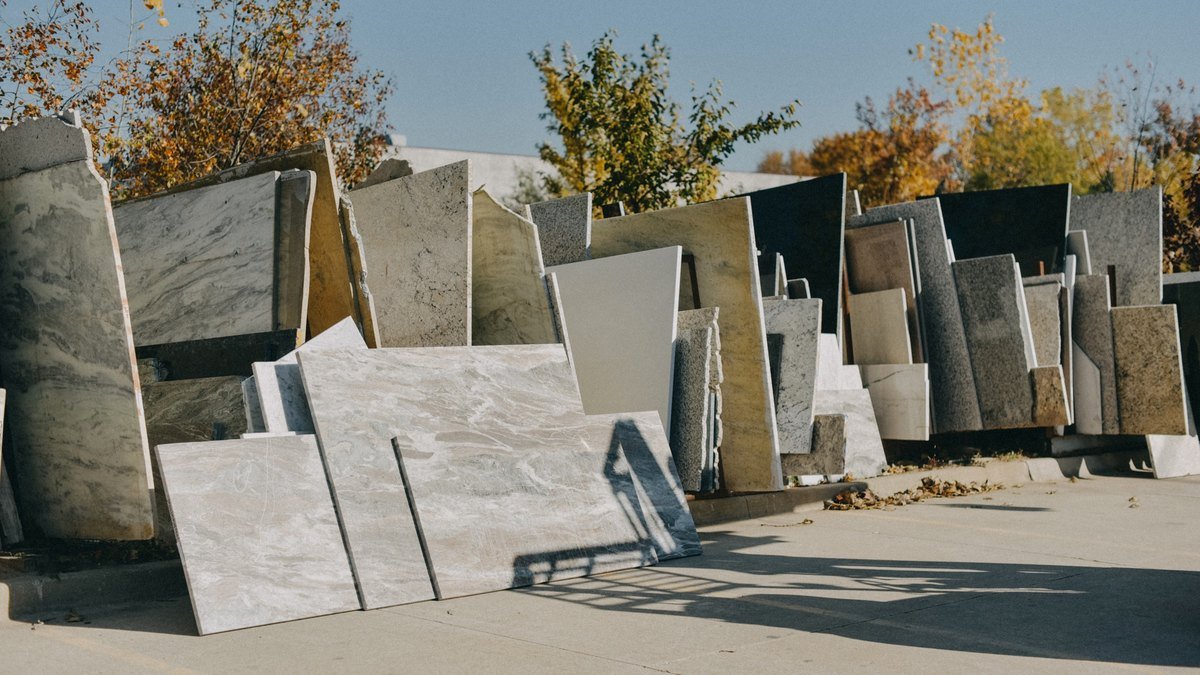
America’s most popular countertop is now at the center of a deadly worker health crisis, as the people who cut and shape engineered quartz develop severe lung disease at an alarming—and rapidly accelerating—pace.
Homeowners who already have quartz countertops are not believed to face the same danger.
“Available evidence suggests engineered stone products do not pose a safety risk after installation” as long as they are not cut or otherwise processed, according to Safe Work Australia, which oversees workplace safety policy in a country that banned many engineered-stone products in 2024.
The mounting evidence is instead threatening the future of the material itself. Australia has already banned many engineered-stone products, while California is pursuing emergency rules that would prohibit fabricating engineered stone containing more than 1% crystalline silica.
What happens next could upend a countertop market long dominated by engineered quartz.
Why quartz became so popular in the first place
To understand what could take its place, it helps to unpack what homeowners look for in a countertop to begin with.
Aesthetics seem to drive the decision most. In a Houzz survey, homeowners ranked look and feel first, durability second, and ease of cleaning third. Cost came in fourth place.
Quartz was appealing because it delivered across those priorities. Over the past three Houzz surveys, engineered quartz was selected for an average 38% of kitchen renovations—more than twice granite’s 18% average.
Its lead has narrowed in recent years, falling from 43% in 2024 to 32% in 2026. But even after that 11-percentage-point decline, no individual alternative came close to displacing it.
It also didn’t demand many trade-offs for that aesthetic appeal.
Take scratch resistance, for example. The Mohs Hardness Scale ranks minerals according to their resistance to scratching, from 1 for talc to 10 for diamond. Engineered quartz scores around 7—hard enough to resist scratches from many objects it would encounter in a kitchen.
Quartz is hardly alone in durability. Porcelain, quartzite, and many granites also land around 7. Even so, these equally sturdy alternatives require far more maintenance.
Granite and quartzite often require periodic sealing. And marble can be damaged by common household acids—even those as mild as lemon juice or vinegar—which react with its calcium carbonate and leave dull, etched areas on the surface.
Soapstone avoids some of those problems. It absorbs very little water and does not require routine sealing, but at roughly 1.5 on the Mohs scale, it’s dramatically softer than quartz and scratches much more readily.
Porcelain comes closest to avoiding many of those compromises. It requires no routine sealing, scores around 7 on the Mohs scale, and resists household acids. Its bigger challenge may be aesthetics, the factor homeowners ranked above durability, maintenance, and cost.
Price introduces another trade-off.
At a midpoint of roughly $125 per square foot in the published ranges we examined, quartz cost nearly twice as much as porcelain and granite. Only quartzite and marble came in higher.
Quartz’s advantage, then, was never simply about one thing. It bundled several qualities homeowners valued into one material—and proved popular enough that they were willing to pay more for it.
So what could replace quartz?
If traditional engineered quartz disappears from parts of the market, there may be no single heir apparent.
Australia offers an early preview. Before the country banned engineered stone in 2024, it accounted for an estimated 55% of the benchtop market. Since then, consumers and fabricators have shifted across a range of substitutes rather than toward one dominant replacement.
The U.S. market already has several contenders positioned to benefit.
Porcelain has the strongest case on function. Of the materials Realtor.com® compared, it comes closest to preserving the combination of durability and low maintenance that helped quartz win homeowners in the first place. Its challenge lies in winning them on the factor they value most: appearance.
Granite offers the best alternative here. It already has the strongest foothold among quartz’s established competitors, giving homeowners a familiar option if engineered quartz becomes harder to buy.
But quartzite has momentum among designers. A majority, 62%, of industry professionals identified natural quartzite as a popular countertop material, just behind quartz, according to the National Kitchen & Bath Association’s 2026 trends survey.
Yet, its higher price and sealing requirements weaken its case as a direct replacement. And its potentially high silica content also exposes a larger problem with the search for a safer substitute.
Replacing quartz won’t eliminate worker risk
This raises a thornier question: Would replacing the material actually solve the worker health problem?
The answer has already become a fight in Congress.
At a House Judiciary subcommittee hearing in January, Rebecca Shult, chief legal officer for U.S. quartz manufacturer Cambria, argued that the material itself is not the problem.
“The problem is the process, not the product,” she told lawmakers, pointing to fabrication shops that fail to adequately control workers’ exposure to silica dust.
David Michaels, the epidemiologist who led OSHA from 2009 to 2017, challenged the idea that compliance with existing workplace standards necessarily makes quartz safe to fabricate.
“OSHA standards are not safe levels,” Michaels testified. The agency must also consider what industries can economically and technologically achieve when setting exposure limits, he explained.
It’s an important nuance to consider here because silica content alone doesn’t appear to explain the severity of disease among engineered-stone workers.
Some quartzites contain more than 90% crystalline silica—roughly the range found in traditional engineered quartz—yet researchers have not documented the same epidemic of rapidly progressing silicosis among workers who fabricate it.
Cal/OSHA says silica exposure from artificial stone is “much more toxic and dangerous” than exposure from natural or sintered stone. Researchers are investigating whether the difference stems from the amount and size of dust generated during fabrication, along with resins, pigments, metals, and other ingredients used to manufacture engineered stone.
No alternative, then, perfectly solves both sides of the equation: reducing the occupational risk while preserving all the qualities homeowners want.
Quartz became America’s favorite countertop by minimizing the compromises homeowners had to make. If the worker health crisis pushes it out of parts of the market, homeowners may once again have to decide which of those compromises they are willing to accept.