
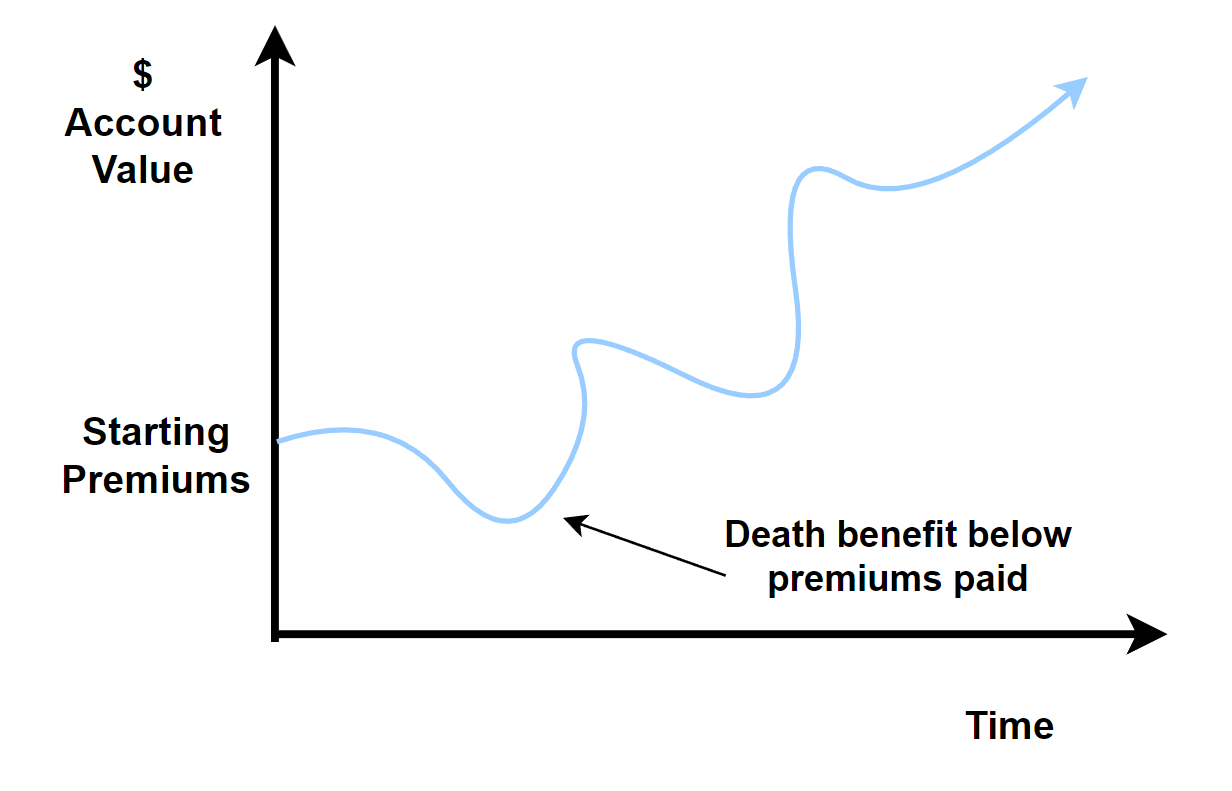
Not too long ago, I made this observation that there are these people who go to banks and they end up purchasing these investment-linked policies (ILP).
And in their mind, they will link the 6-8% income yield from the policy to be guaranteed or protected. Or some parts of the policy to be guaranteed or protected.
This is so wrong and its either the people buying wanted that income yield to be protected or that the person selling lead them to that conclusion somehow during the sales process.
We don’t know time and time again that we have to explain to clients and prospects they came to a wrong conclusion or being lead to a wrong conclusion.
If you asked any fund manager, say the manager of an Allianz Income & Growth fund, or a Pimco GIS Income fund if they are going to guarantee the income distribution they paid last month that it won’t go down, they will tell you never.
And if so where is the guarantee or protection come from?
What seems to be ‘guaranteed or protection’ is because there is usually a death benefit or life insurance tied to the investment linked policy. If the policy holder passes away, the beneficiary of the policy can receive the total premiums that are paid or slightly higher.
This is the only closest thing to the guaranteed.
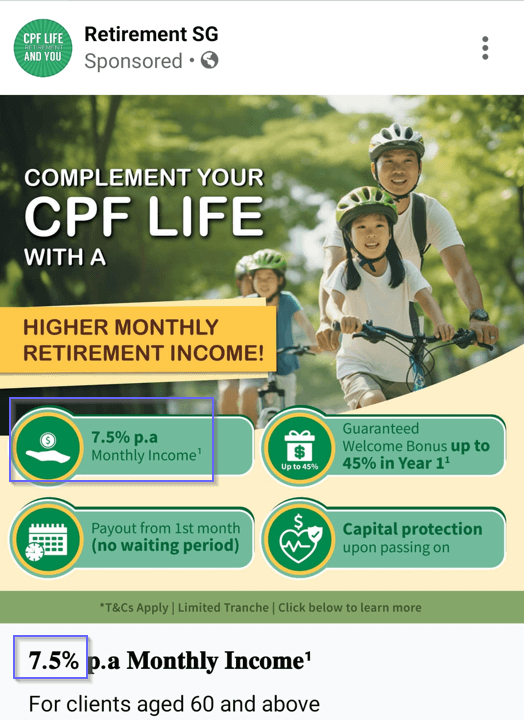
The lead generators used to run these kind of ads (this was taken from an older article of mine two years ago).
If you know the product, you would know how to interpret this but the problem is…. most of these were sold to the people near retirement that requires advise.
Through the process, what comes out was the idea that the income is pretty guaranteed and protected.
It is pretty clear that the protection comes from the product/solution being an insurance.
But recently, I also have a Telegram group member telling us some of his friends prefer these products (despite his best to tell them there is a lower cost alternative) because there is some protection element.
My Telegram group member informed his friend that the same fund that he is interested in can be purchase through online platforms at a lower sales charge (in fact likely no sales charge but recurring wrap fee).
The protection element is big.
And that just sounds weird to me because to me, there are more critical considerations than the death benefit. The death benefit is a good to have and I hope that folks buying should not make that a big part of why you consider it.
I will explain in this post more about the death benefit including that… there are some ILP death benefits that may look very different from your own mental perceptions!
ILPs Sold Nowadays are Mainly for Investments Not Protection
Firstly, this is a motherhood statement especially to the readers who were previously so scarred by investment linked policy. We repeated this motherhood statement so many times.
The investment linked policies that are common nowadays are mainly for investments. They are not optimized to provide death coverage and most of the death coverage comes from the value of the underlying investments, which goes up and down.
The investment linked policies in the past is a combination of the investment and a term life policy where the premiums are increasing over time. The common complains, aside from poor returns, costly is that if you hold the policy to old age, the cost of the term life insurance, for the coverage is so significant that it will kill the value of the policy.
The current form just concentrates on basing off the value of the underlying fund value and this should tell you a lot of how significant is the death benefit protection.
You can attach riders that cover critical illness, or other protection to an ILP and that would disprove my argument that an ILP nowadays is less about protection but you can also buy a rider on a more optimized and appropriate insurance plan than a less optimized one.
Which then brings us to my main point.
If you like a unit trust which you can buy off an online unit trust platform in an ILP, because you find the death benefit appealing, then what are you telling yourself about this investment?
Why Do You Buy an Investment Product or Solution, Expecting That the Value to be Lower Over Time?
As weird as it sounds, this is what your actions are telling me when you prioritize the death benefit protection of your investments, over other more important investment considerations.
Let me explain.
Perhaps the most prevalent structure of death benefit protection for these ILP is this floor protection model:

There are a few other death benefit models, which I will go through later. But the most prevalent ones sold in the market is this floor protection model.
The death benefit is based on the higher of:
- 100%/101%/105%/110% of (total basic premium paid + any top-up premium – any withdrawal made) or
- 100%/105% of account value
The percentage coverage differs from plan to plan (more on that later), but in this death benefit type, your lowest coverage is your total premiums paid and the limit is the prevailing account value, which is determine by your investments.
Now… I am not sure how well verse you are with investments based on a buy-and-hold strategy, and if your goal is to build wealth with this policy, and you intend to hold it for years, the value of the funds in the investment linked policy should go up over time.
What you are afraid of and the fear is real, is that in the shorter term the value of the funds will be lower than the capital that you put in.
The value of your investments can definitely be volatile and be lower than the capital (in this case your total premiums paid) in the short run.
I think this is not that big of an issue for three reasons.
- The first reason is if the policyholder passes away in the short term, most likely the death benefit is not going to be very significant to such a degree that it will by itself be adequate for your family given the policy value of the ILPs advised most often (more on this later).
- The second reason is that even if the policy value is lower than the total premiums, it still forms part of your estate for your beneficiary. This is not too different than normal unit trust and funds in value. Suppose it is down 20% but the residual value still will contribute to the estate.
- The third reason is that the protection coverage, at a phase of life where you are accumulating, that is most important should be MORE than the total premiums of these ILPs typically.
I would probably explain more in the subsequent points.
But as you hold and invest an investment solution like this over time, if you are still worried that your policy value is lower than the total premiums you pay, you have BIGGER PROBLEMS than the death benefit.
Mainly, why do you expect that after 15 years of investments your policy value is still low?
If you don’t have conviction in this investment, you have a bigger problem than the death benefit.
And if you are advise to invest in this ILP, you should go back to your adviser and ask why as a group (you and your adviser) the conviction is so weak that both are afraid the value of what is being advise will be lower than the initial.
And if you are not afraid, then the death benefit is not that big of a deal.
Generally the Death Benefit from an Investment Linked Policy is Less Significant to be Useful for What You have in Mind
I say generally so I hope people don’t twist my words.
This is because most of these policies were sold to people who are younger in the initial stages of wealth accumulation.
Let me maybe push to use a more daring example.
Suppose you commit to a 20-year regular premium ILP by paying $3000 monthly. I use a longer tenure regular premium because this is the structure that advisers have the strongest economic bias to push and what will be recommended the most.
So suppose the policyholder passes away in the short term, in year 3 and the policy account value is less than the total premiums paid up to a point. So the total premiums paid is maybe $108,000 up to that point.
Would a death benefit be useful for the dependents? The young accumulator may not have that much dependents and the $108,000 is a good to have. It will definitely help out the parents (every bit helps), but if instead of a insurance policy and this is a ETF or unit trust and the value is 20% less at $86,400, would it be a big difference for the family?
Making this argument is always going to be subjective, but I would go with that it is not significant functionally.
Now suppose it is not a younger accumulator but someone in the 30s who commits $5,000 a month to the premiums in the same situation. The total premiums at the end of 3 years is $180,000 roughly.
If this policy holder commits 30% of their gross income to pay for the ILP, which will make their annual gross income closer to $200,000.
In the event of death, the dependents would need income replacement which can be base on number of years of income need x amount of income need. There is even a rule of thumb of 8-10 times your annual income (which I don’t quite like).
But if we use that rule of thumb, the need for this 30-something policy holder is closer to $2 mil. $180k will be 10% of the need. But remember that in the alternative, the unit trust is 20% down but doesn’t mean the estate receives $0 from the unit trust. 20% less is still $144,000.
Death Benefit that is Functional for Your Needs are Usually Away from ILPs
If the above sounds complex to you, that means either you looked this ILP up and adamant about buying it, or that there were no more comprehensive insurance planning done.
In the above example of the 30-something year old, if you really need $2 million in coverage, and you want that $2 mil to wholly come from an ILP, that means that your death benefit needs to be that much, and also your total premiums or account value to be $2 mil at 30-something.
How likely is that?
A $2 mil policy will mean you roughly need a scalable insurance premium contribution.
All this kind of means that if you need the death benefit that your family dependents really need in the event of your passing, it has to come from other insurance such as term life insurance.
Kyith, What about a Single Premium ILP of $500,000? That One Significant Enough Right?
Ok that is significant in absolute terms that it most likely will move a needle.
But entertain me this: You go out there, and ask how many of the ILP plans people buy… end up single-premium ILPs?
When they were propositioned to you, the adviser strongly advise you to put $500,000 in one single lump sum WITHOUT YOU SAYING YOU WANT a single premium ILP.
Almost all the cases I see on my subreddit, in my Telegram group, what i heard from my colleagues at Havend is mainly regular premium.
Even the most recent one, which i came across through private message was equivalent in value to a 5-room HDB flat.
And he/she was advised to pay through 3 years of regular premium!
And if the dollar value is large enough, my ex-colleague Mike will wonder at that level when you can afford a $500,000 or more investment, why won’t you get the investments through better means?
But that is beside the point.
$500,000 in single premium is significant enough and some may want this (instead of a universal life policy) for legacy planning.
But you also need to be aware that if you are looking for such ILP for coverage and the policy value falls 20%, and you are 75 year old holding this policy, the insurance cost will eat into your return. There is no free lunch and you are paying for that protection.
Nominating an ILP to a Beneficiary Does Provide Liquidity
I do think an advantage of an ILP as an insurance policy over buying unit trust instead is that you can nominate your policy to a beneficiary and the process of getting the money will be faster than the probate process of eventually releasing money to the estate executor.
This will provide much needed liquidity.
Of course, this is an option which means you don’t need an ILP to get liquidity. You can just nominate a small term policy to provide some liquidity instead of an ILP. But this is a big up over unit trust.
Your Financial Plan and the Investment Considerations Related to Your Plan is More Important than this Death Benefit
My gripe with the industry is that there is so much selling but yet the policyholder that held this policy focus on the wrong things, such as income, and death benefit protection.
Yet when you ask them important things such as how does owning this add up to your overall plan, the policy holder has no idea.
You should be specific and know what this policy role is in your financial plan.
It is suppose to be for wealth accumulation and decumulation.
And if so, what are some of the main considerations? Perhaps they are:
- What are sound strategies to accumulate wealth or to provide income?
- What are some of the important specifics of these strategies?
- Buying and holding to harness the power of compounding.
- The risks that you should be taking: Equity and fixed income.
- The risks that you should NOT be taking: Concentration in sector, regions
- Keeping cost as low as possible.
- Extracting a low and manageable income relative to the portfolio value for income strategies.
These are more important considerations and death benefit is way, way, way down the list.
And it does make sense because: Do you want something that have death protection if you passed away but after 20 years the whole policy only accumulates value at 2% p.a.?
You don’t want that right?
So what is more important here? The investment considerations because that is a bigger monster/headache that you are trying to get round!
And if you do that, for the sake of my Telegram group member you would realize that if you buy a unit trust in an ILP structure and held for 20 years, your return would lose either 1%-2% p.a. compare to maybe 0.5% p.a. (since the platforms have their recurring fee).
So if you put $10,000 a year for 10 years then accumulate for 10 years, the absolute difference here is $15,567 to $33,476 less (1% and 2% p.a. cost respectively).
The difference between something you buy off a unit trust platform and an ILP is advice.
And if you are getting good recurring advise from your adviser then it is good but from for the most part when these things come to me, why are folks looking for other channels for advise instead of their own adviser? That is an indication that either you are not getting your money’s worth for paying that advice cost through an ILP structure.
The Death Benefit Payout of Investment Linked Policies (ILP) are not All Similar
Over the years, what I observe is that there are a few different death benefit sets.
I think is important that you know how much benefit your beneficiary will get if you passed away so that you can match the expectation with the actual eventual reality.
There might be valid reasons for these set of death benefits.
Also know that, these death benefits are insurance and so while the benefits look good, you are paying the cost of insurance in higher premiums. This eats into your returns.
We will go through different type of sets, their difference, and how the outcome would be.
- A floor and higher account value
- Account value only
- Based on total premiums, escalating at 3% yearly capped at 160% of total premiums
- You can choose between 1 or 2
- Difference in benefits based on before or after a matured age.
- Benefit locks in higher and higher.
a. The Death Benefit is the Higher of Total Premiums Paid or Current Account Value
This set is by far the most common.
The death benefit is either the total premiums that you contribute, less what you take out in contractual terms or the prevailing account value.
What I collated is the following from the policy statements.
Pays the higher of:
- 100%/101%/105%/110% of (total basic premium paid + any top-up premium – any withdrawal made) or
- 100%/105% of account value
Minus any amount owe to the insurer
The insurance plans that have this type of death benefit sets are:
- AIA Pro Achiever [100% of premiums]
- AIA Pro Achiever II [100%]
- AIA Pro Achiever III [100%]
- Manulife Invest Ready II [101%]
- Manulife Invest Ready III [101%]
- ManuInvest Duo [100%]
- ManuInvest Assure [105%]
- PruVantage Wealth [101% but 105% if due to accident]
- PruVantage Wealth II [101% but 105% if due to accident]
- PruVantage Assure (SP) [100%]
- HSBC Life Wealth Voyage [101%]
- HSBC Life Wealth Abundance [101%]
- HSBC Life/AXA Wealth Invest [101%]
- Etiqa Invest Builder [105%]
- Great Wealth Advantage [110%]
- Great Wealth Advantage [105%]
- Great Wealth Advantage 4 [101%]
- Great Wealth Multiplier 3 [105%]
- Singlife Savvy Invest [101%]
- Singlife Savvy Invest II [101%]
- Singlife Legacy Invest [101%]
- FWD First Horizon [101%][105% of account value]
You would realize is that the coverage of total premiums are slightly different but the amount in the grand scheme, might not be too significant unless your premiums in absolute terms is very significant. Then again 110% looks significant enough.
FWD First Horizon is the only one where they will cover 105% of the prevailing account value while the rest is just 100% of account value.
This scheme provides a floor to the death benefit.
Suppose policyholder’s total premiums end up $10,000.
When policyholder passed away the actual value is $8,000, the set will pay out 100%-110% of the premiums depending on the contract.
If the $10,000 grow to $15,000 and the death benefit is $15,000.
In a way, this policy protects volatility in the earlier years, which if the policyholder is young, the cost of insurance is very, very, very low. In the later years the death benefit is actually the value of the investments in the account plus a little more, which should not cost that much.
But I think a policy that has a death benefit of 110% vs 100% should have higher cost of insurance.
b. Death Benefit based only on Account Value
In contrast to #a, the death benefit of this group comes based on the account value.
So they will be like this:
Pay 102%/105% of the account value
The insurance plans that have this type of death benefit sets are:
- AXA Wealth Harvest [102%]
- FWD Forward First [105%]
- FWD Forward First Plus [105%]
- FWD Forward First Max [105%]
- TM Go Elite [105%]

If the account value of the policyholder is below the premiums paid, the death benefit is 102/105% of the account value.
There is no difference between this and a normal investment [except maybe 2-5% more lah] because if your normal investment falls 20%, your “death benefit” for the normal investment is the same as this.
In a way, I expect the cost of insurance to be the most negligible for this.
If you are looking for some kind of floor in event of passing, I wonder if this is the plan you should go for.
c. The death benefit based on total premiums but it escalates, up to a certain ceiling
Only Prudential’s PruVantage Assure has this kind of death benefit.
Pay
- 103% of premiums
- Increase 3% yearly of total regular premiums paid until it reaches 160% of total regular premiums paid
The insurance plans that have this type of death benefit sets are:
- PruVantage Assure
- PruVantage Assure II
The death benefit is very much based on your starting premiums. This is different from the Assure (SP) and likely the older Assure policies.
If your investments in the ILP did better than 3% a year or more than 160% of the regular premiums, than the death benefit is less than the prevailing account value.
The cost of insurance is pretty unique in that it is capped.
d. You choose which Death Benefit set you Desire
In this group of policy, you get to choose your desired death benefit.
There are two to three Optional Sets to choose from:
- Set 1: 101% of account value
- Set 2: the higher of:
- 101% of account value or
- 100% of (total basic premium paid + any top-up premium – any withdrawal made)
- Set 3: Scheme 2 Plus lifetime coverage after 99 years old.
The insurance plans that have this type of death benefit sets are:
- AXA Pulsar [Set 1 & 2]
- TM Go Classic [Set 1 & 2]
- TM Go Affluence [Set 1, 2 & 3]
You either choose from the two prevalent death benefit sets that I talked about, whether you want to have a floor death benefit or you want the prevailing account value.
They basically give you the option to choose if you want insurance death benefit protection.
TM Go Affluence, adds an option to cover for longer, which is basically adding a whole life coverage.
e. Death Benefit depends on Age
There are two different sets here but both of them are age based.
The first one is for HSBC Life Wealth Accelerate:
Death Benefit based on Different Age:
- Before 66 years old: Pay BOTH:
- 101% of account value
- 15% of (account value – top ups – RSPs), capped at S$500,000/ US$350,000
- After 66 years old: Pay
Before 66 years old, HSBC Life Wealth Accelerate death benefit coverage is your investment account value and a weird 15% more of the account value capped at $500k?
This feels more like 116% of the account value.
After 66, the death benefit reverts back to 101% of account value.
So this is basically a % of account value.
By breaking up into two time periods, it also show us that the cost of insurance would probably be cheaper before 66 years old and after 66, not only may the account value be more significant after that, this leads to costlier insurance cost after 66 something that the insurer is unwilling to bear.
TM Go Assure, from Tokio Marine is something similar:
- Before [Choose age 65-99] years old: Pay higher of:
- 100% of account value
- 100% of (total basic premium paid + any top-up premium – any withdrawal made)
- After [Choose age 65-99] years old: Pay
The difference for TM Go Assure is instead of paying BOTH it is the classic higher of account value or premiums before a certain age and 101 account value after that.
f. Death Benefits Go Up as Account Accumulates in Value, and Locks in a Higher Floor
Finally the last one, which is unique to Tokio Marine Go Elite Secure.
Elite Secure is a single premium ILP whose death benefit is the higher of the following:
- Total premiums
- Locked-in Policy Value. Every month, the locked in policy value will be adjusted to the highest monthly account value.
So what this kind of means is that as your policy accumulates from $10,000 to $15,000, the death benefit locks at $15,000.
If the account falls from $15,000 to $13,000 and the policyholder passes away, the death benefit is $15,000 if that is the last value locked during the policy monthly anniversay.
Go Elite Secure is the one which secures the value the best.
In a way, the policy holder can reduced the Locked-in Policy Value if they wish to.
This one make sense because you bear the insurance cost. Suppose that your $10,000 policy grows to $50,000 (lets say) and locks in at that account value. If the investment fall to $20,000, then based on the sum-at-risk, which is $50,000 -$20,000 = $30,000 your insurance cost is on that $30,000 using your current age.
So if this happens when you are 70 years old, and your cost of insurance at that age is dearer times $30,000 it is a much, much more relatively significant sum.
Thus, if you do not require so much protection, it makes sense to apply for a reduction in the Locked-in Policy Value.
Summary of the Six Different Set of Death Benefits
Just as a recap here are roughly the different types:
- A floor and higher account value
- Account value only
- Based on total premiums, escalating at 3% yearly capped at 160% of total premiums
- You can choose between 1 or 2
- Difference in benefits based on before or after a matured age.
- Benefit locks in higher and higher.
You would realize that the death benefit covers is mainly based on slightly more than the prevailing account value which means that, these policies are not too different from the same unit trust you can get from Phillips, iFast or whichever platform.
The more prevalent ones will have a premium floor, which if your investments is sound, the natural compounding of money should make the premium floor death benefit protection irrelevant overtime.
If you still feel the death benefit, for your investment is a big thing for you, then you should understand the difference in the sets above and match your expectations accordingly.
Epilogue
If you tell me you like to get an ILP because you cannot get the investments from elsewhere and that return potential is really good, or that you have this really good adviser who helps you a lot in building wealth and he recommends this policy, I think those are more important things to discuss and we can have a good conversation about.
But man… I hope it doesn’t end up that you like the capital protection or the guaranteed aspect.
It kind of shows a broken off relationship or a non-existent relationship with your adviser which means that you grossly overpaid for something because a respectable and good enough adviser will tell you “Sir, or Madam, please focus on the main thing. Only your beneficiaries will see the death benefit.”
If benefits is a big thing, then I hope you got a policy whose protection matches what you wish to construct.
But mainly, I think most people big up the death benefit too much. Advisers use the death benefit as a throw in to make it seem like the overall investment solution adds so much value versus the same thing you can buy from a cheaper alternative.
It is less important in the grand scheme of things because the most prevalent difference is short term fluctuations and usually the investment losses in the short term is much less significant in an estate.
And if the losses are so significant, and we know ILPs are not very optimized to provide protection, what the hell is your adviser planning for you?
If you want to trade these stocks I mentioned, you can open an account with Interactive Brokers. Interactive Brokers is the leading low-cost and efficient broker I use and trust to invest & trade my holdings in Singapore, the United States, London Stock Exchange and Hong Kong Stock Exchange. They allow you to trade stocks, ETFs, options, futures, forex, bonds and funds worldwide from a single integrated account.
You can read more about my thoughts about Interactive Brokers in this Interactive Brokers Deep Dive Series, starting with how to create & fund your Interactive Brokers account easily.

Kyith is the Owner and Sole Writer behind Investment Moats. Readers tune in to Investment Moats to learn and build stronger, firmer wealth foundations, how to have a Passive investment strategy, know more about investing in REITs and the nuts and bolts of Active Investing.
Readers also follow Kyith to learn how to plan well for Financial Security and Financial Independence.
Kyith worked as an IT operations engineer from 2004 to 2019. Currently, he works as a Senior Solutions Specialist in Insurance Start-up Havend. All opinions on Investment Moats are his own and does not represent the views of Providend.
You can view Kyith’s current portfolio here, which uses his Free Google Stock Portfolio Tracker.
His investment broker of choice is Interactive Brokers, which allows him to invest in securities from different exchanges all over the world, at very low commission rates, without custodian fees, near spot currency rates.
You can read more about Kyith here.