
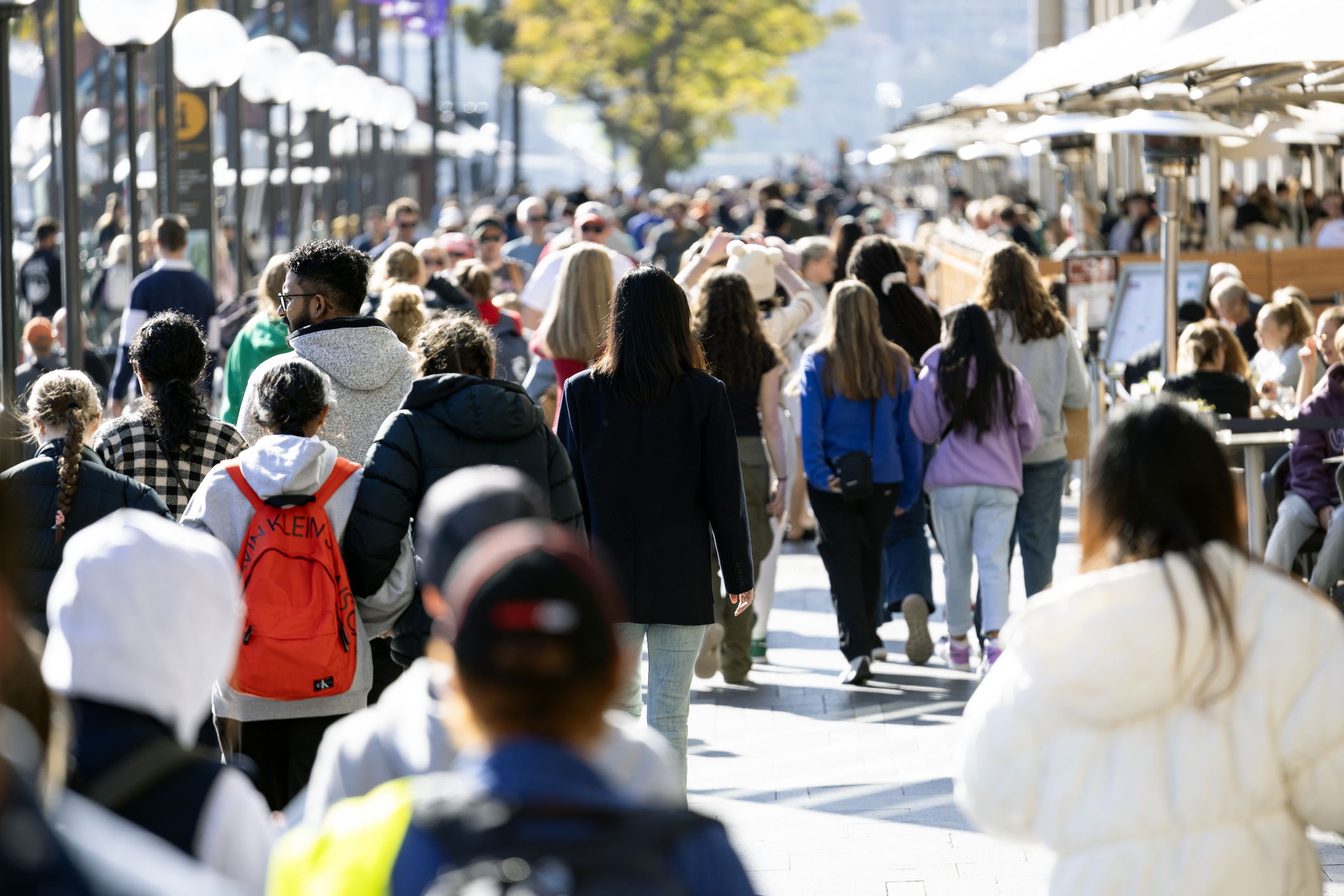
Australia’s unemployment rate has held steady in June, pushing pressure onto next week’s inflation data to lock in the Reserve Bank’s next interest rate move.
Jobs data from the Australian Bureau of Statistics on Thursday showed the unemployment rate remained at 4.4% in June, largely in line with economists’ expectations.
June and May’s 4.4% rate followed a higher 4.5% in April, up from 4.3% in March.
The number of unemployed people rose by 13,000 people over June as 76,000 people started new jobs despite seasonal lulls typically observed over the winter months.
“This represents a stronger June movement than has been observed in recent years,” ABS head of labour statistics Sean Crick said. “We also continued to see higher numbers of people remaining employed this June, following elevated levels in the recent few months.”
Minister for employment and workplace relations Amanda Rishworth said the data proves Australia’s labour market is resilient.
Minister for employment and workplace relations, Amanda Rishworth. Picture: Hilary Wardhaugh
“Despite ongoing global uncertainty, employment continues to grow; the unemployment rate remains low and participation is close to its record high,” she said.
“We have made a lot of progress, but we know some Australians are still doing it tough.”
Ms Rishworth’s message echoes that of RBA governor Michele Bullock’s communications following the bank’s decision to keep rates on hold last month after three consecutive hikes.
“This is a difficult period for households,” she said. “Unless we have low and stable inflation, we’re not going to be able to have an economy with a good level of employment that grows as well as it can.”
The Reserve Bank estimates say the economy can only grow by about 2%.
Reserve Bank of Australia governor Michele Bullock has warned households are under pressure. Picture: Vernon Yuen/NurPhoto
“Much stronger growth than that is going to cause inflation,” Ms Bullock warned.
High inflation was the theme of the first half of the year in Australia and globally, with much of 2026 characterised economically by the Iran War-induced global oil crisis.
While the RBA does not expect underlying inflation to be back within its 2-3% target until 2028, its foot is off the gas as it waits to see how this year’s tightening plays out in the economy as the war continues.
Expectations for the bank’s next move on the 11 August have held fairly stable over the past two weeks, with the Australian Securities Exchange indicator showing markets are currently pricing in a 19% chance of a rate hike.
All eyes are set to be on crucial inflation data from the ABS next week however, expected to perhaps be the most crucial of the year.
Both the RBA and the Treasury have long expected June to be the peak for war related inflation, with the headline Consumer Price Index expected to be around 5%.
Weakening relations and a fractured peace deal between the United States and Iran have cast doubt on the forecast however, with negotiations to end the war continuing to be challenged.
Australia’s largest home loan lender Commonwealth Bank is anticipating homeowners could be in for a quieter second half of the year however, locking in dovish expectations ahead of next week.
Commonwealth Bank economists expect a rate hold next month. Picture: Getty
CBA economists expect headline inflation of 4.0% in June, alongside an increased trimmed mean inflation figure of 3.7%.
The trimmed mean, which strips out the most volatile prices changes each month, held fairly steady through March and April before finally reflecting the flow-through effect of the oil crisis with a 0.2% jump in the 12 months to May.
“While the outlook for underlying inflation is still too high, we continue to expect the RBA to remain on hold through the rest of 2026,” senior economist Trend Saunders said.
“Slower growth and a gradual lift in the unemployment rate should give the board scope to stay on the sidelines this year.
| Month | Trimmed mean inflation (%) |
| May | 3.6 |
| April | 3.4 |
| March | 3.3 |
| February | 3.3 |
| January | 3.3 |
“The rapid slowdown in the housing market will also weigh on domestic activity, offsetting some of the upward pressure on inflation.”
Economists from CBA, ANZ and National Australia Bank are all expecting a rate hold from the RBA on 11 August, with Westpac the outlier with a forecast for a 0.25% hike.
RBA deputy governor Sarah Hunter warned Aussie households not to count their chickens before they hatch, saying earlier this month that further rate hikes and rising unemployment can be expected as tensions in the Middle East continue.
“As a small open economy, we are buffeted by changes in the global environment,” she said. “The board will continue to act as needed to ensure inflation returns to target and the labour market to sustainable full employment.”