
The blue economy is no longer limited to traditional activities such as fishing, shipping, or offshore energy. A new generation of startups is applying climate technology, AI, robotics, biotechnology, and advanced water treatment to make the use of oceans and water resources cleaner, safer, and more efficient.
EU-Startups’ 2026 coverage shows Europe’s blue economy attracting capital across a widening range of technologies and business models. Among the larger disclosed rounds were €17 million for cargo.one alongside its acquisition of ocean-freight platform Cargofive or €10 million for marine-biofuel developer Kvasir Technologies.
These deals form part of a broader funding landscape in which startups are tackling an increasingly diverse set of challenges linked to how Europe uses, manages and protects its water and marine resources.
From restoring coastal ecosystems and generating tidal power to removing hazardous pollutants, improving wastewater treatment, supporting aquaculture, automating maritime operations, and digitalising shipping workflows. The 10 startups featured below, founded between 2020 and 2026, show how innovation is reshaping the sector, in alphabetical order.
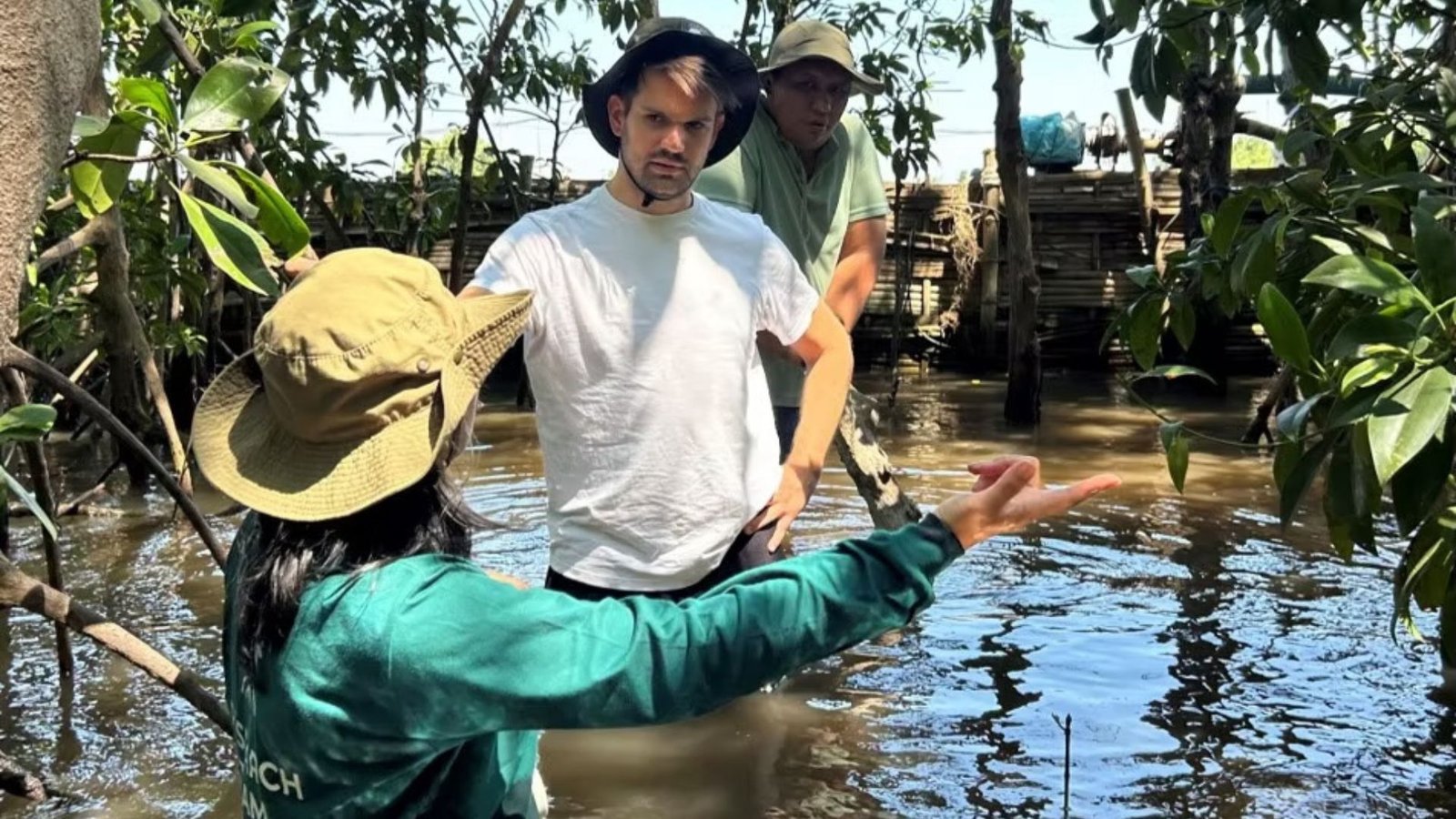
Apolownia is a Paris-based ClimateTech startup committed to making the world more environmentally responsible. It develops end-to-end coastal ecosystem restoration and blue carbon projects, including mangroves and seagrass, which help absorb carbon, reduce coastal flooding and erosion, improve water quality, and provide vital habitats for fish and other marine life.
Its projects use satellite imagery, drones, field data and AI to monitor ecosystem recovery, estimate carbon capture and verify environmental results in a clear, data-driven way. Founded in 2024, it has raised €1 million in funding.

Headquartered in Heidelberg, Blue Activity develops sustainable water treatment solutions for industrial cooling systems. Its technology replaces toxic biocides with natural microorganisms and uses biopolymer-based additives, supported by digital monitoring. This reduces chemical use, water and energy consumption, maintenance needs, and operating costs.
They promote cleaner industrial water use and reduce harmful substances discharged into the environment, contributing to healthier water resources and more sustainable industry. Founded in 2021, Blue Activity secured €8.5 million in funding.

Launched in 2024 in Oxford, Caudal Energy takes a bio-inspired approach to tidal power, using ocean currents to generate predictable renewable electricity. Its system replaces conventional rotating turbines with moving fins inspired by marine animals, offering a lower-impact solution with simpler installation and maintenance.
This activity matters because tidal energy provides a more predictable source of renewable power than solar and wind, which are more dependent on weather conditions. By harnessing ocean currents, Caudal Energy can support the transition away from fossil fuels while making sustainable use of marine resources. Its innovative approach has enabled them to raise €6.43 million in total funding.

Heidelberg-based Enzo focuses on preventing water damage before it becomes costly. Its one-drop sensor attaches to a building’s main water pipe. The startup uses AI to identify unusual water-use patterns and small leaks in real time, allowing homeowners, property managers, and insurers to act before major damage occurs.
Its activity is especially useful as early leak detection can prevent water waste, expensive repairs, and unnecessary use of materials and energy, contributing to more sustainable water management. Launched in 2021, Enzo raised €6.3 million in funding.

Lir Labs develops an AI-powered microscopy for wastewater treatment, turning microscopic activity in water into real-time operational insights. Its automated sensors use deep-learning models to identify changes in microorganisms and particles, allowing treatment plants to detect problems earlier and adjust processes before they become costly or disruptive.
Their approach to better wastewater monitoring can reduce pollution, unnecessary energy and chemical use, and the risk of poorly treated water reaching natural ecosystems. Founded in 2025 in London, Lir Labs raised €245k in funding.

Mirai Robotics is a Maritime Technology startup building AI-powered systems that allow boats and other maritime vehicles to operate with little or no human control. Its technology can guide vessels, process data from onboard sensors, and make real-time decisions during activities such as sea patrols, inspections, monitoring, and transport.
Its activity is relevant to the blue economy because it can make maritime operations safer, faster, and more efficient, particularly in remote or hazardous areas where deploying human crews can be costly or risky. Launched in 2025 in Bari, this innovative approach to maritime automation and safety has helped Mirai Robotics secure €3.6 million in funding.

Founded in 2023 in Ireland, Nernst Electric develops on-site oxygen generation for aquaculture. Its technology uses ceramic membranes to separate high-purity oxygen directly from the surrounding air, allowing fish farms to produce oxygen where it is needed instead of relying on costly deliveries. A reliable oxygen supply is essential for maintaining healthy fish and productive farming conditions, particularly at remote sites.
Its efficient way of producing oxygen can make aquaculture more reliable, cost-effective, and sustainable while reducing energy use and dependence on transported liquid oxygen. Nernst Electric has a total funding of €1.7 million.

NPHarvest has developed a new hardware solution for the collection and recycling of nutrients from wastewater, turning them into valuable ingredients for fertilisers. Installed at wastewater, biogas, and agricultural facilities, its system captures nitrogen and phosphorus that would otherwise be lost as waste and converts them into reusable resources. The technology can recover up to 90% of these nutrients while operating with relatively low energy use.
As excesses of nitrogen and phosphorus can pollute waterways and contribute to eutrophication, managing levels in the water is important. By recovering these nutrients before they reach the environment, NPHarvest supports cleaner aquatic ecosystems while creating a circular source of fertiliser. Founded in 2023 in Espoo, they raised €3.4 million in total funding.

Zürich-based Oxyle tackles some of the hardest-to-remove pollutants in water, particularly PFAS, also known as “forever chemicals”. Rather than simply filtering these substances out, the company’s treatment systems break them down at the molecular level, preventing them from being transferred into another waste stream. The technology is designed for contaminated groundwater and industrial wastewater across sectors such as chemicals, pharmaceuticals, semiconductors, and waste management.
Removing hazardous chemicals from wastewater helps prevent them from reaching rivers, groundwater, and marine ecosystems, supporting cleaner and safer water resources. Founded in 2020, Oxyle has raised €19 million in funding.

Founded in 2021 in Berlin, Tilla is a MaritimeTech startup bringing greater efficiency to crew changes in the shipping industry. Its digital platform brings voyage schedules, crew information, port services, flights, and travel requirements into one place, allowing shipping companies to plan and manage crew movements with fewer manual tasks, lower costs, and better coordination.
By digitalising a process still heavily dependent on spreadsheets, emails, and manual coordination, Tilla supports more efficient maritime operations and improves the working experience of seafarers. The company raised €4 million in total funding.