
Australia is in the grip of its worst heatwave in six years, with temperatures skyrocketing past 47C in some regions, and the mercury isn’t set to drop until the weekend.
But beyond the sweltering conditions, a new crisis is brewing for homeowners: the very real threat of crippling fines for trying to save their dying lawns.
With strict water restrictions now a harsh reality across the nation, property owners face a brutal choice: watch their once-lush lawns turn to dust, or risk copping penalties that could run into the thousands.
Keeping your lawn and plants alive: Expert advice amid the heat
Horticulturalist Sabrina Hahn warns that the extreme heat isn’t just drying out the soil; it’s actively sucking moisture from plant leaf tissue.
“Extreme heat causes all sorts of stress factors in plants, and it’s not just the ground drying out, it’s moisture coming out of the leaf tissue as well,” she told Yahoo Lifestyle.
Her advice for keeping “green babies” alive without breaking the bank or the law?
Thoroughly water early in the morning.
MORE NEWS
Dumb aircon mistake a million Aussies make
Viral $0 hack kills garden weeds in just 24 hours
Shock $19 Bunnings hack saves thousands
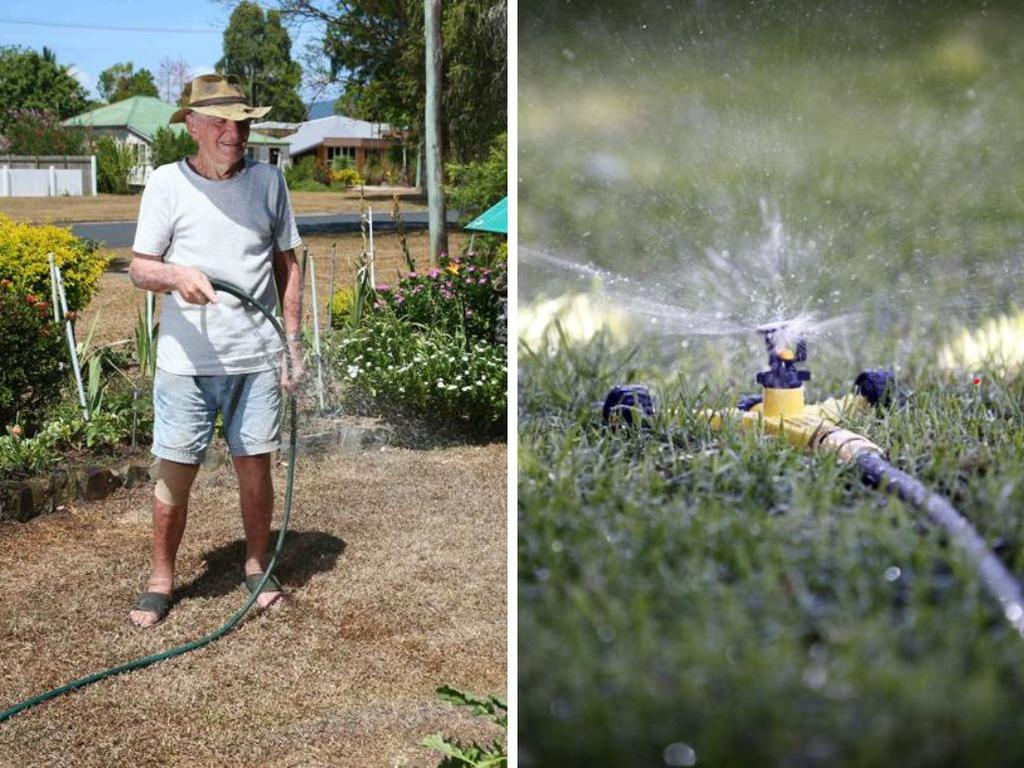
Gordonvale resident Jack Deon hand waters his Swan St garden every second day. Picture: Brendan Radke
For those brutal 40C-plus days, she even suggests a second watering in the evening.
And for those working from home, Hahn busts a long-held myth:
“If you hose your foliage down on a 40-degree day, it’s really, really good for the plant,” she explained, noting that moisture is absorbed directly through the leaf’s stomata. Just avoid fertiliser, which can overwhelm struggling plants.
Hahn also revealed a “sunscreen” for plants: Yates’ Drought Shield.
This product creates a polymer coating on leaves, preventing moisture loss.

Garden expert Sabrina Hahn gave some hot tips on how to protect your lawn, garden, and plants during a heatwave. Picture: Facebook
“You just clip it onto the end of your hose, and you spray the foliage and that last months,” she said, noting a 2.5L bottle costs about $34 at hardware stores.
Nathan Edwards, a spokesman for Lawn Solutions Australia, highlighted other strategies for those battling water restrictions.
“When things are really dry, like at the moment, and you’re worried about browning or you’re unable to access a water supply, you can use soil wetter products which will stop your lawn from being hydrophobic,” he advised.
Products like Lawn Soaker improve water penetration, ensuring every precious drop counts. He also stressed the importance of watering before the heat of the day and opting for two to three thorough soaks a week, rather than frequent, short stints, which can make lawns thirstier.
The viral desperation: Painting your lawn green
As homeowners face the grim reality of dead lawns and looming fines, a desperate, yet viral, trend has emerged: painting your lawn green.
Perth’s Mariah Elaine, living in a city notorious for its dry summers and strict water restrictions, sparked a social media frenzy after sharing a video of her “painting” her “yellow and dead” lawn.
While critics were quick to scoff, experts are backing the controversial move.
Nathan Edwards confirmed Elaine was using ColourGuard – a product combining green pigment with lawn fertiliser.
A woman posted a video of her “painting” her lawn on social media. Picture: TikTok

The before and after of Mariah’s lawn after painting it with ColourGuard. Picture: TikTok
“It’s a pigment and lawn fertiliser so when it looks discoloured it can be a good way to give a lawn a quick green up,” he said.
This could be the ultimate workaround for those desperate to maintain their property’s appearance without risking a fine.
Even indoor plants aren’t immune. Hahn warns against blasting them with airconditioning. “There’s no such thing as an ‘indoor’ plant,” she stated.
“They all come from the tropics and they do not like cold air.”
Instead, group them together and mist spray them for essential leaf moisture. A clever hack for slow hydration? Drop a few ice cubes onto the soil before you leave for work.
The fine print: Navigating Australia’s water restrictions
Water corporations are not messing around.
Fines for watering during restricted times can range from on-the-spot penalties to eye-watering sums for repeat offenders.
The Bureau of Meteorology’s Water Restrictions website serves as a crucial resource, highlighting how rules vary dramatically by state, territory, and even local water agency.
In Sydney, Water Wise Guidelines permit using drinking water for gardens and lawns only before 10am and after 4pm.
Permitted methods include handheld hoses with instant on-off mechanisms, sprinklers, or watering systems.
Aussies should familiarise themselves with local council watering laws to potentially avoid big fines.
Smart watering systems or drip irrigation can be used between 10am and 4pm. Notably, new turf or gardens get a 28-day grace period for anytime watering.
Victoria, meanwhile, operates under Permanent Water Saving Rules, while in Western Australia, Permanent Water Efficiency Measures, introduced in 2007, apply to both scheme water users and garden bore users, featuring a roster system and a winter sprinkler ban in Perth from June to August.
Tasmania is currently on Stage 1 restrictions, limiting manual sprinkler or drip watering systems to between 6am and 8am and 8pm and 10pm daily, including for lawns.
South Australia has Water Wise Measures in place, allowing hand watering at any time, but sprinklers can only be used after 5pm and before 10am on any day.
As for fine for those ignoring the rules, Sydney homeowners have been hit with $220 fines in the past, while Western Australia has issued $100 on-the-spot notices.
However, under current regulations, a first offence can attract fines in the thousands, escalating dramatically for subsequent breaches.
This means your wilting turf could literally cost you a fortune.
As Australia swelters, the choice for homeowners is stark: adapt your gardening habits, embrace innovative solutions like plant sunscreen or even the viral lawn paint, or risk facing thousands of dollars in fines from vigilant water corporations.
Your lawn’s survival, and your wallet’s health, depend on it.