
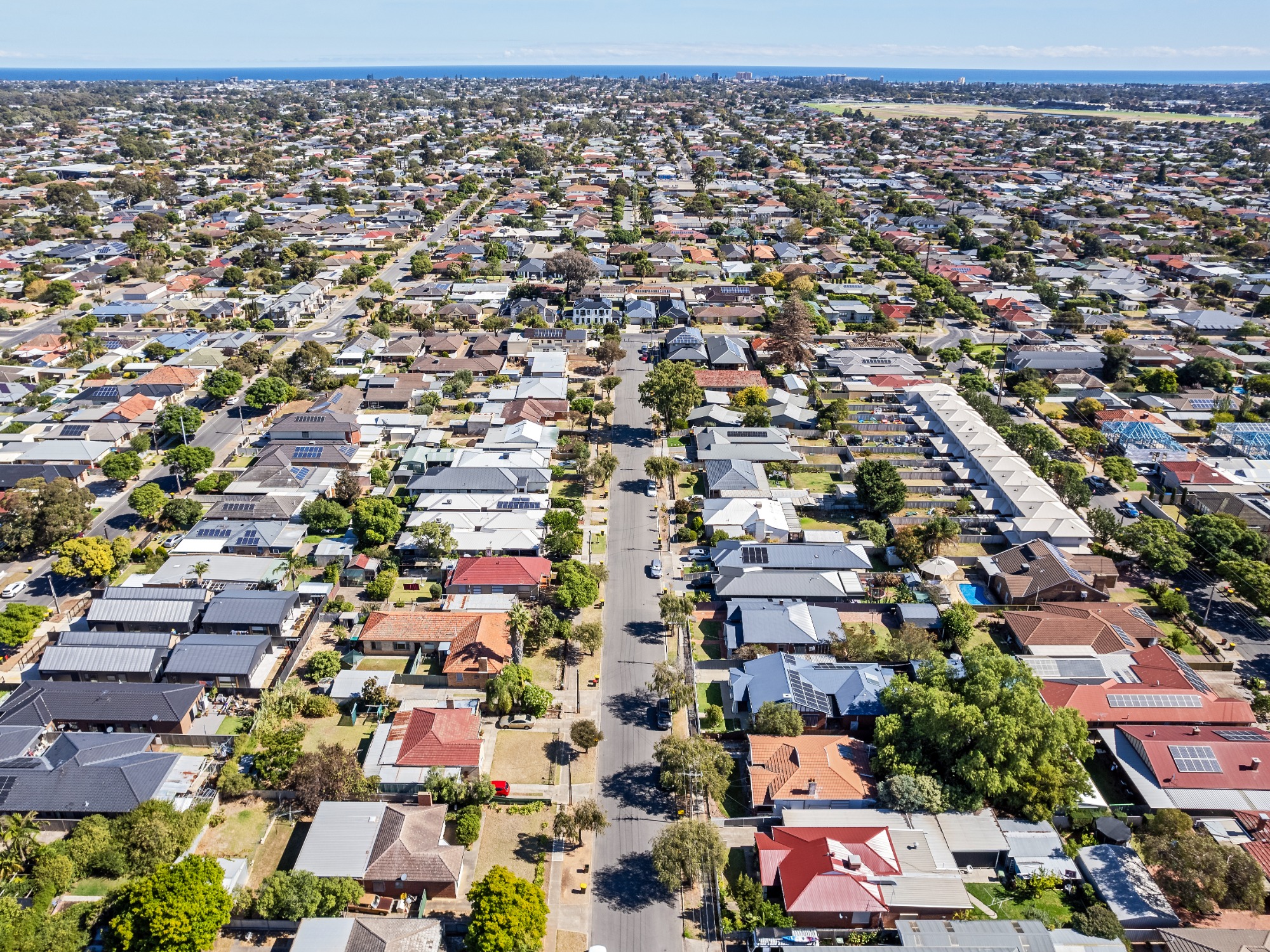
Despite early signs of recovery, new research shows Australia is heading for a 380,000‑home shortfall as construction lags demand.
Data from the Urban Development Institute of Australia (UDIA) shows the nation is unlikely to meet the National Housing Accord target of 1.2 million new homes by the end of the decade.
The findings come from UDIA’s annual State of the Land (SOTL) report, released this week, which examines residential development activity across Australia’s capital cities and housing segments.
The report forecasts a national dwelling shortfall of 380,000 homes by 2030, equivalent to about 76,000 homes or roughly the size of Greater Cairns, every year.
According to the report, Australia faces a 380,000 homes shortfall by 2030. Picture: Getty
New dwelling production is also expected to fall a further 11% in 2026, which UDIA national president Oscar Stanley said was being driven by a mix of rising costs, labour shortages and volatile apartment construction activity.
“Elevated construction costs, labour constraints, infrastructure funding challenges and increasingly complex planning systems are placing significant pressure on development feasibility and limiting the pace at which new housing can be delivered,” Mr Stanley said in the report.
“These structural challenges are particularly evident in the apartment and multi-unit sectors, where development activity remains well below historic norms.”
A split story
When broken down by housing type, the report reveals a split picture between detached housing and apartments.
In terms of completions, about 78,400 detached houses were completed across capital city greenfield release areas and infill locations in 2025 – a 1% decline from 2024.
Detached housing sales recorded a modest recovery over 2025, with greenfield lot sales rising 10% nationally to a total of 43,185 sales.
Greater Sydney led the rebound, with sales up 29% on 2024, while Greater Melbourne recorded a 50% lift. The ACT also saw a sharp increase of 62%.
In contrast, activity fell in South East Queensland (-7%), Greater Adelaide (-15%) and Greater Perth (-4%).
Despite the improvement, overall capital city greenfield sales remain 11% below the decade average.
New research from Oliver Hume Property Group suggests demand for new housing is continuing to build beneath the surface, despite uneven conditions across markets.
The company’s newly released Land Index and Residential Outlook, which examines the current state of major land markets across Australia, shows four of the five markets are operating above long‑term trend levels.
“The South East Queensland, Perth, and Adelaide markets have the majority of indicators performing historically strongly; Sydney has moved back above what is considered a normalised market, while Melbourne remains below normalised market activity levels,” Oliver Hume chief economist Matt Bell said.
In the year to the December 2025 quarter, sales volumes increased in Melbourne (24%), Sydney (183%), Adelaide (29%) and Perth (52%), while South East Queensland fell by 1%.
Despite Melbourne remaining below trend, the report points to pent‑up demand and improving established housing conditions as key supports for a recovery this year.
The picture is weaker for apartments and multi‑unit housing.

Multi-unit completions fell 34% over 2025. Picture: Getty
Total multi‑unit completions dropped 24% over the year to 34,600 homes, and remain 42% below peak supply levels achieved in 2017.
According to the SOTL report, new apartment and multi‑unit sales fell 12% in 2025 to 18,700 transactions, which is 40% below the decade average.
Recent building approval data highlights just how volatile the segment has become, with multi‑unit approvals accounting for much of the overall construction downturn in late 2025 and early 2026. Approvals fell 30.7% in December 2025 and 24.5% in January 2026.
Can the system be unlocked?
UDIA says the industry has the capacity to build the homes Australians need – if governments unlock the system.
The organisation is calling for a range of measures to help boost housing supply.
“To restore housing supply at the scale required, governments must prioritise policies that enable development to proceed efficiently and feasibly,” Mr Stanley said.
“This includes boosting development‑ready land supply, streamlining planning approvals, addressing infrastructure funding constraints and ensuring planning systems support the timely delivery of new housing across all markets.”
The UDIA SOTL report was compiled with research partners Researchfour, Cotality and Charter Keck Cramer.
Interested in learning more about buying or building new? Explore our New Homes section.