
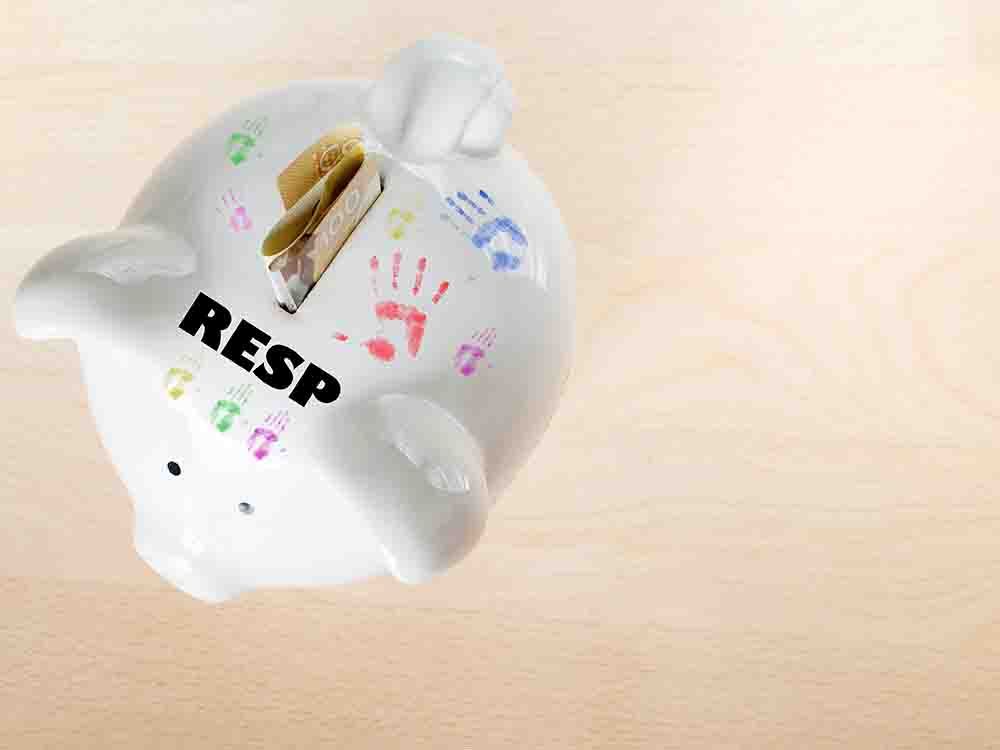
I’m not looking for pity here, and I won’t get it, but I have too much money in my family’s registered education savings plan.
If that sounds like the kind of problem most parents would love to have, I agree. But when it comes to
, having too much can create its own set of planning headaches, particularly if your kids start earning real income while they’re still in school.
A primary goal with an RESP is to grab as much government grant money as possible and shelter investment gains, only to withdraw those funds later when your children’s income is low and their tuition bills are high. Those investment gains look better than ever if you’ve been in a stock market with the
up close to 90 per cent over the past five years and an
that has nearly kept pace.
Add in the fact that my children spent much of their university years in co-op placements or jobs, making decent money, and suddenly the RESP’s tax-efficient promise becomes something that actually requires real strategy.
“Year-end is essential,” said Peter Lewis, president and chief executive of CST Savings Inc., a group RESP company that has been around for about 60 years. That applies both to families trying to squeeze in contributions and those looking to withdraw funds.
If you haven’t maximized your grant room, Dec. 31 becomes a deadline, because of the ability to “catch up.”
RESPs took off in 1998, when Ottawa introduced a 20 per cent match on the first $2,500 of annual contributions up to a lifetime maximum of $7,200 per beneficiary. Since unused grant room carries forward, you can catch up at year-end by contributing $5,000 to trigger up to two years’ worth of grants, or $1,000, every year until Dec. 31 of the year the student turns 17.
Lewis said there is no limit on how far you can carry it forward. “(If) I’ve missed five years of contributions, for the next five years I can put in $5,000 and eventually catch up on those five years of grants,” he said, warning that you can run out of time as your children age to maximize the grant money if you have never contributed.
The other year-end debate is how to handle the withdrawals or educational assistance payments (EAPs) which include grants and investment gains that are taxed in the student’s hands.
If students work, even through an internship, this can complicate RESP withdrawals.
Dan Richards, a professor at the Rotman School of Management at the University of Toronto, said that MBA students on a 13-week internship remain full-time students during that period, making them eligible to receive withdrawals.
“In an increasingly tough job market, one thing students can do to increase their chances of getting a (full-time) job is to do a co-op,” said Richards, adding MBA students at Rotman make in a range of $1,200 to $1,500 a week, with some going outside that range. “Getting paid does make it meaningful.”
Medhat Sedarose, senior manager of the co-op program at the Ted Rogers School of Management at Toronto Metropolitan University (TMU), said internship programs at post-secondary institutions date back to the 1950s. TMU, formerly known as Ryerson University, has had co-ops for 25 years.
TMU has seen co-op enrolment balloon from about 250 students in 2017 to about 3,400 today.
“What it means is they can earn enough during a work semester to come back and pay for their tuition and pay for a semester without having to take on further loans,” said Sedarose, adding that co-op students generally make more in future salaries.
It’s not chump change. Undergraduate students can earn an average of $56,000 over four work terms in the TMU program, as wages usually rise with each work term as students pursue a Bachelor of Commerce degree.
Great for them. Tricky for RESP withdrawals.
Peter Wouters of PlainTalk Consulting said parents always ask the same thing: How do we decide what to take out, and when? Contributions can be made tax-free at any time, but grants and income require finesse.
A first-year full-time student can take out up to $8,000 in taxable EAPs after 13 weeks. With a basic personal amount of $16,129 in 2025, that should be tax-free, unless your kid suddenly has a well-paying job.
“Near year-end, you have the chance to think about how much income the student has and whether you want to pop them into a higher income tax bracket,” said Wouters. “Once Jan. 1 rolls around, your options start to shrink.”
If your child is in that higher tax bracket and you need the money, you could withdraw your contribution, which could be as much as $36,000 if you have been maximizing grant money.
If you’re a high net worth Canadian, you could use the RESP money to cover other school expenses and use your other funds to add to your TFSA or open a First Home Savings Account, Wouters said.
Lewis of CST Savings said the standard advice is simple: Take the income and grants first while you can, because your child needs to be enrolled to access them. But co-op students complicate that rule. “I actually think co-op is brilliant,” he said. “But it changes the dynamic; earning income could push them into a bracket where withdrawing RESP income could create a higher tax burden.”
If you’re lucky enough to have an overstuffed RESP or a child earning too much money, your biggest concern may be paying a little tax.
And if the worst-case scenario is writing a small cheque to the Canada Revenue Agency because your kids worked hard and your investments did well, count your blessings.
• Email: gmarr@postmedia.com